




The Socceroos spent 45 minutes chasing shadows in Seattle — and by the time they finally woke up, the damage was already done.
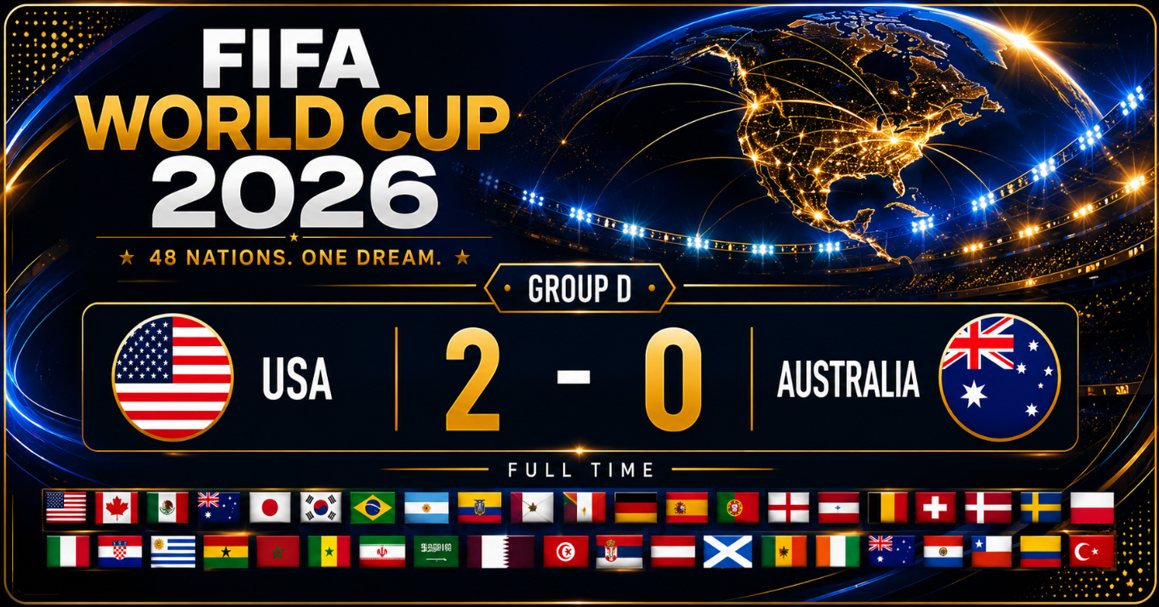
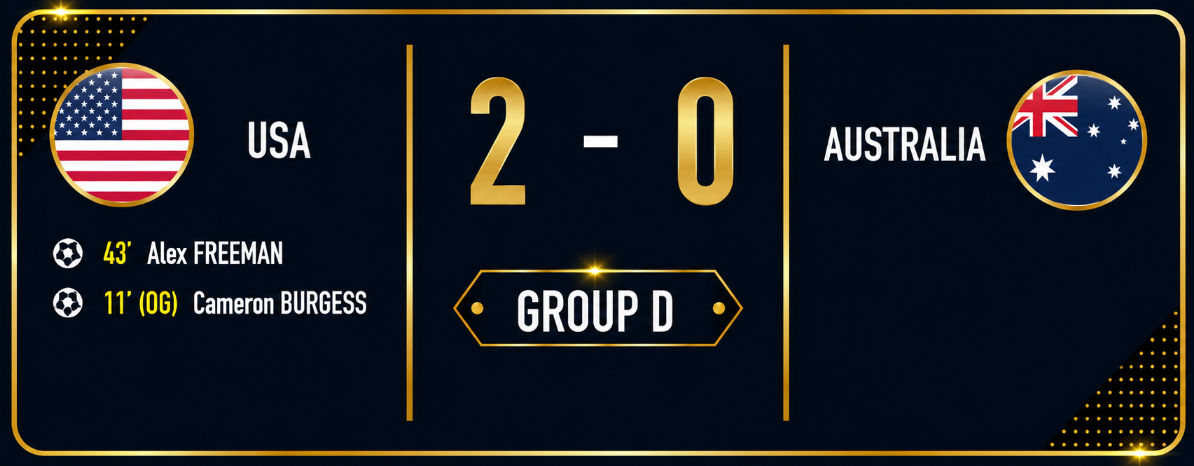
Australia’s World Cup momentum hit a speed bump at Seattle’s Lumen Field on Saturday, June 20 (AEST), falling 2-0 to the United States after a disappointing first half in which Tony Popovic’s side struggled to cope with the hosts’ intensity, movement and pressure. The response after halftime was far more encouraging, but it came too late to rescue a result.
For all the disappointment, Australia remains firmly in the hunt for a place in the Round of 32 heading into next week’s final Group D clash against Paraguay.
Americans Set The Early Tone
The opening minute suggested Australia might be in for a productive morning.

Mohamed Toure pounced on a loose pass and forced Matt Freese into a save after just 40 seconds, but it quickly became apparent that the United States had no intention of allowing the Socceroos to settle.
The hosts pressed aggressively, moved the ball sharply and repeatedly found space around Australia’s midfield. Malik Tillman was influential between the lines, while Folarin Balogun’s pace immediately caused concern whenever the Americans turned defence into attack.
The breakthrough came after 11 minutes.
Balogun drove to the byline and fired a dangerous ball across the six-yard box. Cameron Burgess, scrambling back towards goal under pressure, could only divert the cross into his own net.



The Americans kept coming.
Every time Australia appeared to have weathered the storm, possession was handed straight back. Balogun was causing problems. Tillman was finding pockets. Dest had far too much room.
The game was being played almost entirely on American terms.
Harry Souttar and Alessandro Circati were forced into plenty of defensive work, while Jordan Bos picked up an early booking as frustration began creeping into the contest.
VAR Frustration Deepens The Hole
The second goal arrived just before halftime and only added to Australian frustration.
A free-kick routine ended with Dest’s shot taking a deflection and looping high into the penalty area. Freeman reacted quickest and headed beyond Patrick Beach from close range.
The assistant referee immediately raised the flag.
After a lengthy VAR review, however, the goal was awarded despite Balogun standing in an offside position as the ball dropped into the area.
Australia protested. The decision stood.
Whether Balogun was interfering with play will remain a talking point, but the larger issue for Popovic was the performance that had preceded it.
The Socceroos looked off the pace. Loose passes surrendered possession. Second balls were routinely won by the Americans. When opportunities arose to settle the game, Australia rarely took them.
Popovic’s assessment afterwards reflected what everyone had seen.
“I don’t know if it was the occasion but we looked sluggish and heavy-legged,” he said.
“They were quicker and more powerful. They won every duel and every second ball.”
Popovic Turns To His Bench
Popovic did not wait long to act.
Connor Metcalfe, Nestory Irankunda and Jason Geria were all sent on at halftime, with Cameron Burgess, Nishan Velupillay and Mohamed Toure making way.
The game looked different almost straight away.
Metcalfe got Australia moving through midfield. Irankunda gave the Americans something to chase. Suddenly the ball was sticking.
For the first time all morning, the United States were being asked questions.
The hosts still carried a threat. Early in the half Balogun burst clear and appeared set to add a third before Circati produced a superb recovery challenge to block the attempt.
At 3-0 the match would likely have been over.
Instead, Australia began to gain territory and, more importantly, belief.
Volpato Provides A Spark
Cristian Volpato’s introduction midway through the second half gave the Socceroos another attacking dimension.
Making his World Cup debut after replacing the injured Mathew Leckie, Volpato quickly became involved. His first major contribution saw him combine with Irankunda before firing over the crossbar from a promising position.
It was the sort of move Australia simply hadn’t produced before halftime.
Metcalfe forced Freese into a save after a strong pressing sequence. Irankunda repeatedly drove at defenders. Volpato found space in areas Australia had barely occupied during the opening period.
The crowd, roaring for most of the first half, grew noticeably quieter as Australia started stringing passes together.
The Americans were still dangerous on the break, but they were no longer controlling every aspect of the contest.
Australia’s best chance arrived during a chaotic scramble inside the penalty area when Souttar failed to make clean contact with the ball in front of goal. Geria then saw an effort blocked as the Americans scrambled clear.
Australia spent the closing stages camped in the American half, but the breakthrough never arrived.
All Roads Lead To Paraguay
The defeat leaves Australia needing a result against Paraguay in San Francisco next week, but qualification remains firmly within reach.
A win should be enough to secure progression. Depending on results elsewhere, a draw may also keep the Socceroos alive.
Popovic will be disappointed with how his side handled the opening 45 minutes, particularly against a United States team that looked sharper from the outset despite missing injured star Christian Pulisic.
He may have found a few answers after halftime.
Volpato, Irankunda and Metcalfe all made strong cases for bigger roles in the final group match.
The performance raised as many questions as it answered.
Australia looked a long way off the pace before halftime. After the break, it looked capable of troubling the group leaders.
Which version turns up against Paraguay may decide whether the Socceroos’ World Cup continues.