




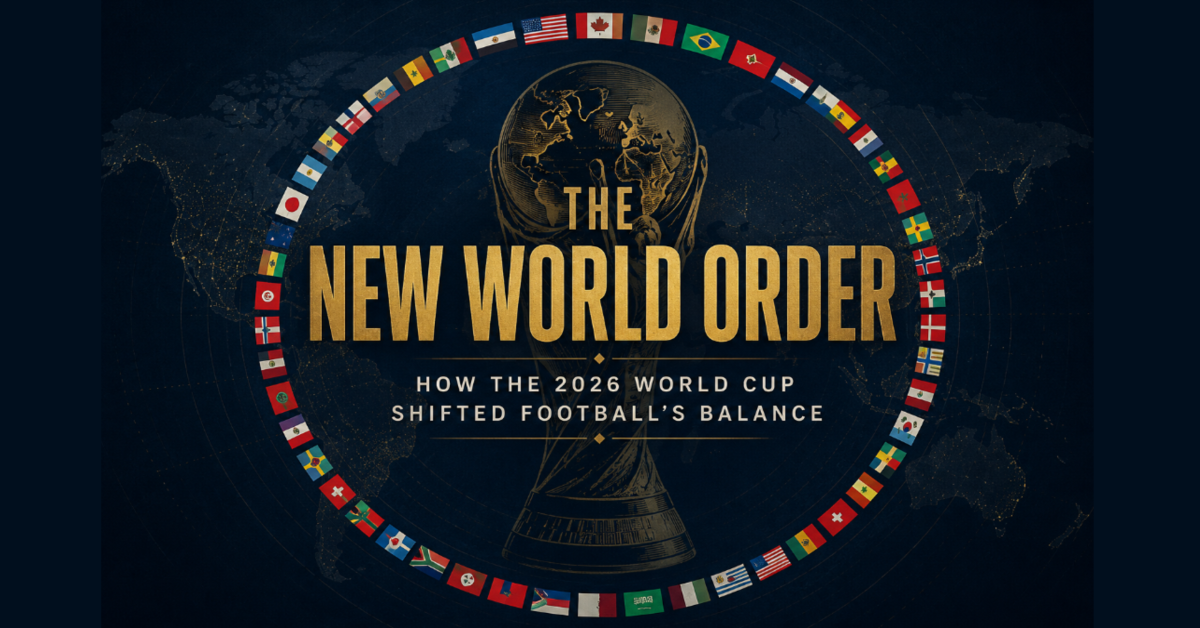
Spain lifted the trophy, but the biggest story of the 2026 FIFA World Cup reached far beyond the final whistle.
Across a month of football in North America, the established powers still found their way into the closing rounds, yet the margin separating them from the rest of the world looked smaller than ever. Brazil fell to Norway. Germany’s campaign ended in a penalty shootout against Paraguay. Morocco backed up its breakthrough in Qatar by reaching another semi-final after eliminating the Netherlands, while Cabo Verde stretched Argentina into extra time before finally being beaten.
None of those nations lifted the trophy. All of them left the tournament with greater credibility than when they arrived. All of them changed the conversation.
By the time Spain edged Argentina 1-0 after extra time in the final, this World Cup had become about far more than one country’s triumph. Reputation no longer guaranteed progress, and football’s traditional hierarchy felt less certain than it had four years earlier. It was a tournament that echoed Arrigo Sacchi‘s enduring observation:
“Football belongs to whoever plays it best.”
— Arrigo Sacchi
Nobody Had An Easy Run
Look back through the knockout bracket and one thing stands out immediately: every favourite was forced to earn its place.
Argentina needed extra time to eliminate Cabo Verde in the Round of 16 before edging Switzerland in the quarter-finals and then England in the semi-finals.
Spain’s route to the title took them through Austria in the Round of 16, Portugal in the quarter-finals, France in the semi-finals and finally Argentina in the final, while England found themselves recovering from deficits against Mexico in the Round of 16 and Norway in the quarter-finals before securing third place against France in the bronze medal match.
Even Brazil, so often expected to contend deep into a World Cup, never reached the quarter-finals after Norway’s Round of 16 upset of Brazil produced one of the tournament’s defining results.



The names in the final four were familiar. The journey to get there was anything but.
The Gap Has Closed
For years, football has talked about the rise of nations outside the traditional elite. In 2026, that conversation finally felt settled.
Morocco proved their run to the semi-finals in Qatar was not a once-off. Paraguay’s penalty shootout win over Germany sent another heavyweight home early. Norway’s victory over Brazil confirmed they were no longer outsiders. Egypt’s Round of 16 victory over Australia and Switzerland’s penalty shootout win over Colombia reinforced how little now separates many of the world’s best teams.
None of those results would have been dismissed as impossible. A decade ago, several would have been.
That may be the clearest sign yet of how much international football has changed.
Different Heroes Stepped Forward
One of the defining themes of the tournament wasn’t the farewell of an ageing superstar. It was the arrival of players now ready to become the faces of the next World Cup cycle.
Jude Bellingham (England) drove England through the knockout rounds, scoring twice against Norway before adding another in the bronze medal match. Bukayo Saka (England) finished the tournament with a hat-trick against France. Spain never relied on one match-winner either. Ferran Torres (Spain) settled the final in extra time after Pedro Porro (Spain), Mikel Oyarzabal (Spain) and Mikel Merino (Spain) had all delivered decisive moments earlier in the tournament.
Argentina still leaned on Lionel Messi (Argentina), but Lautaro Martínez (Argentina) and Enzo Fernández (Argentina) increasingly shaped the biggest moments. Norway’s charge owed much to Erling Haaland (Norway), whose performance against Brazil became one of the images of the tournament.
The stars were recognisable. The balance between generations had unmistakably shifted.
Winning Became A Squad Exercise
The deeper the tournament went, the less it resembled a contest decided by starting XIs alone.
Extra-time football became a recurring feature of the knockout rounds. Spain’s victory over Argentina in the final, England’s comeback against Norway in the quarter-finals and Norway’s upset of Brazil in the Round of 16 all demanded more than 90 minutes of planning from the coaches involved.
Tactical flexibility, fresh legs and the ability to change a match from the bench became just as valuable as individual brilliance.
Depth was no longer a luxury. It became a requirement.
Spain Set The Standard
Spain deserved to be champions not because they dominated every opponent, but because they consistently found answers.
Their path to the trophy took them past Austria in the Round of 16, Portugal in the quarter-finals, France in the semi-finals and Argentina in the final. Each opponent posed a different challenge, yet Spain adapted every time. Their success was built on structure, patience and contributions from throughout the squad rather than dependence on one headline name.
In a tournament defined by narrow margins, that proved to be the difference.
A Different World Cup
Every World Cup leaves behind a champion.
Some leave behind something bigger.
The lasting memory of 2026 may not be Spain lifting the trophy. It may be the moment football finally accepted that the old hierarchy no longer offers guarantees. Traditional powers remain exactly that — powerful. But every four years, more nations arrive believing they belong, and increasingly they have the performances to justify that belief.
Spain won the World Cup.
The rest of the world ensured the race for the next one is more open than it has been in decades.
Published 20-July-2026