




Springfield Families Set to Welcome First Babies at New Mater Hospital

Mater Hospital Springfield on Health Care Drive is days away from welcoming its first babies, with Mater Mothers’ Springfield set to open, giving families across Greater Springfield, Ipswich and West Moreton access to maternity services they have never had locally before.


The opening marks one of the most significant milestones in the community’s history. For more than a decade, Springfield families expecting a baby have had no choice but to travel to Brisbane, Ipswich or Logan to give birth. That changes this week, with six birthing suites, a 16-bed maternity ward, a 16-cot Neonatal Critical Care Unit and a 24-hour Pregnancy Assessment Centre all coming online on level five of the new hospital.

Mater Hospital Springfield General Manager Suzanne Hawksley said the moment had been years in the making.

“It’s hard to believe we will soon be welcoming our first babies,” Hawksley said. “We are all excited to be part of such a huge moment for Springfield and its wonderful families.”

Antenatal clinics have already been running at the hospital since it began its staged opening on 13 April, meaning some expectant mothers are already familiar with the building where they will give birth.

A hospital built for one of Australia’s fastest-growing communities

The nine-storey Mater Hospital Springfield represents a $1 billion investment in healthcare for the western corridor, comprising $393 million in capital funding and a $638 million operational commitment over the first four years, alongside a $26 million land contribution from Mater. Construction was completed by John Holland, with more than 100 staff already onsite for training, simulations and onboarding before each service opened.

Once fully operational, the hospital will carry 186 public beds, a 54-bay Emergency Department, and is forecast to handle around 185,000 patient presentations annually. The maternity service alone is expected to deliver approximately 1,700 babies each year.
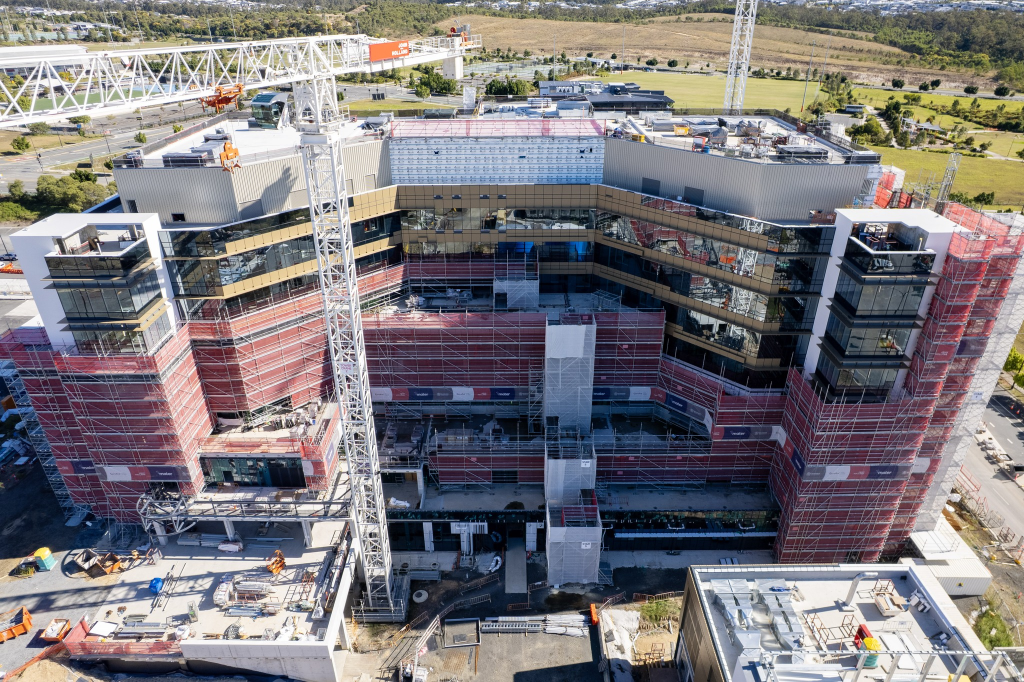
Photo Credit: Mater/Facebook

The facility employs more than 1,000 staff including over 500 nurses and midwives, and more than 130 doctors. The Springfield Lakes News estimates the hospital will increase employment across Greater Springfield by around eight per cent.

Mater Group CEO Julia Strickland-Bellamy said the hospital reflects the organisation’s longstanding commitment to communities experiencing rapid growth.

“Mater Hospital Springfield will transform health services across the western corridor, delivering high-quality care in the heart of the community,” Strickland-Bellamy said.

Care closer to home for Springfield families

Mater Mothers’ Springfield is part of Australia’s largest maternity service network. The Springfield campus offers six birthing suites, two of which include birthing baths with mood lighting and Bluetooth connectivity, alongside a 16-bed inpatient maternity ward, a 24-hour Pregnancy Assessment Centre and a 16-cot Neonatal Critical Care Unit for babies requiring lifesaving care or born prematurely.

For the first time, families in the catchment, Greater Springfield, parts of Ipswich and West Moreton, can now access the full Mater Mothers’ service from antenatal appointments through to birth and postnatal care without leaving their community.
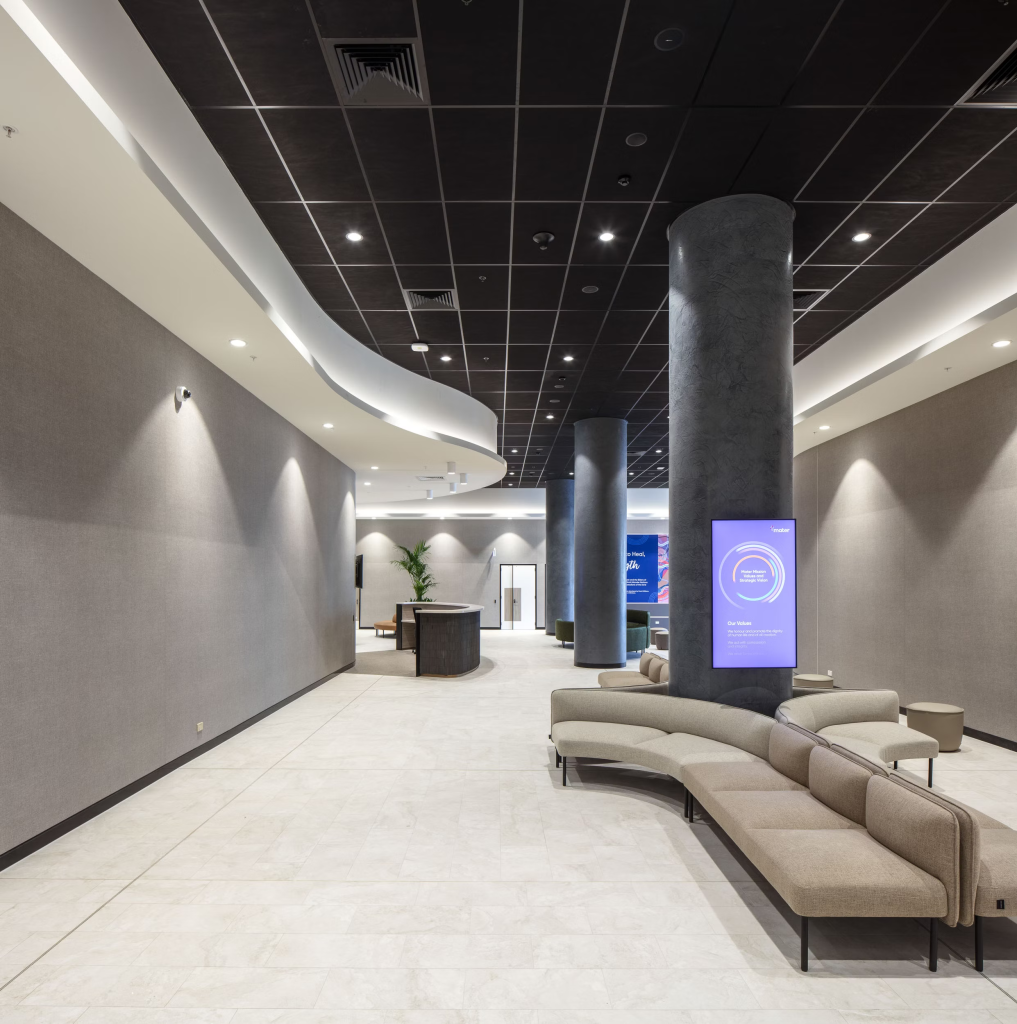
Photo Credit: Apollo Property

The Mater Health Hub in Springfield, a two-minute drive from the main hospital, provides additional support including a Fourth Trimester Essentials programme, women’s health physiotherapy and a drop-in breastfeeding clinic.

Mater has been part of the Springfield community since 2015, when it opened Mater Private Hospital Springfield as the master-planned city’s first hospital. That campus grew from an 80-bed facility into an integrated private precinct. The new public hospital on the adjacent site completes the vision.

What’s still to come

The maternity opening on 11 May is not the hospital’s final milestone. The Emergency Department and paediatric ward open on 25 May 2026, completing the full service rollout. The paediatric unit is expected to handle around 2,500 inpatient admissions annually, covering conditions including chest infections, asthma, epilepsy, croup and jaundice.

Mater Hospital Springfield is at Health Care Drive, Springfield Central. For service information, visiting hours and updates as the hospital continues its staged opening, visit mater.org.au/hospitals/mater-hospital-springfield.


Published 28-April-2026
Springfield Is Getting Queensland’s First House of India, and It’s Been Decades in the Making

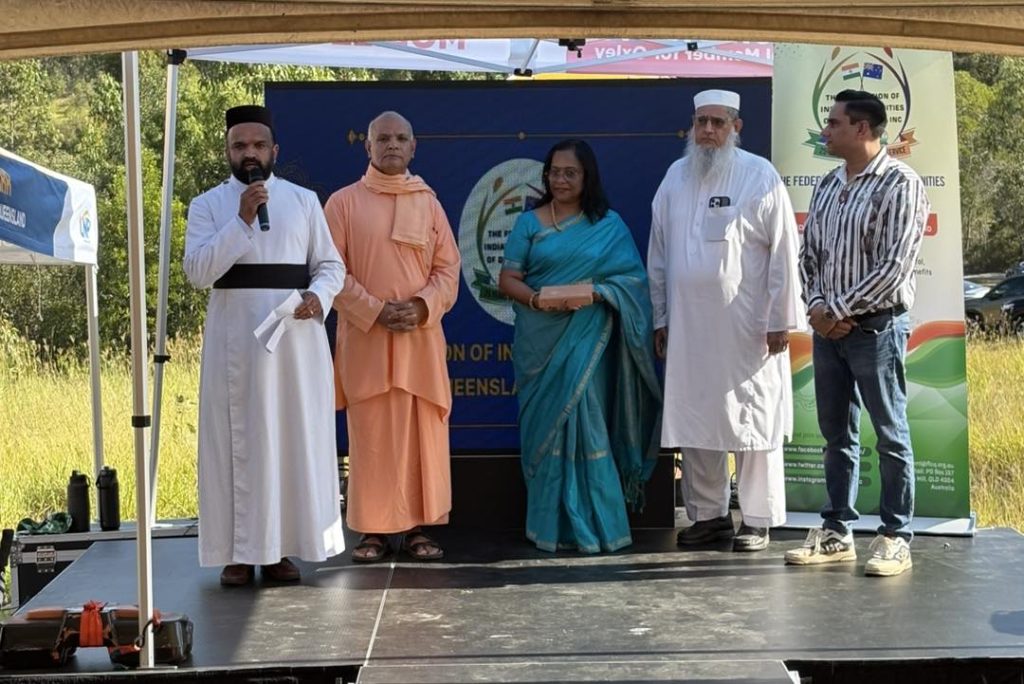
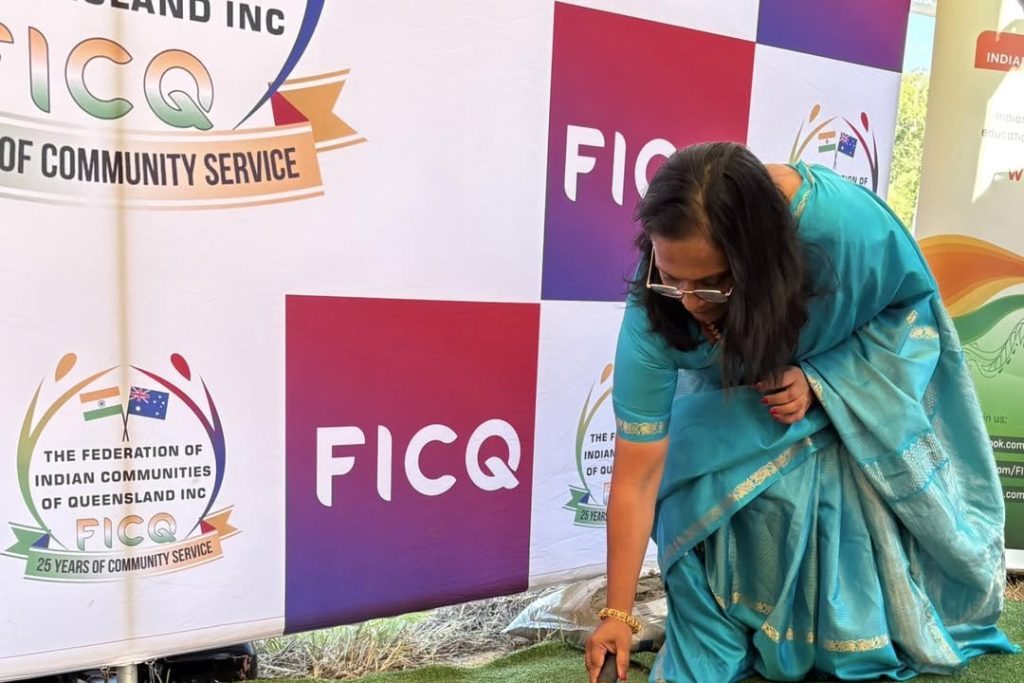
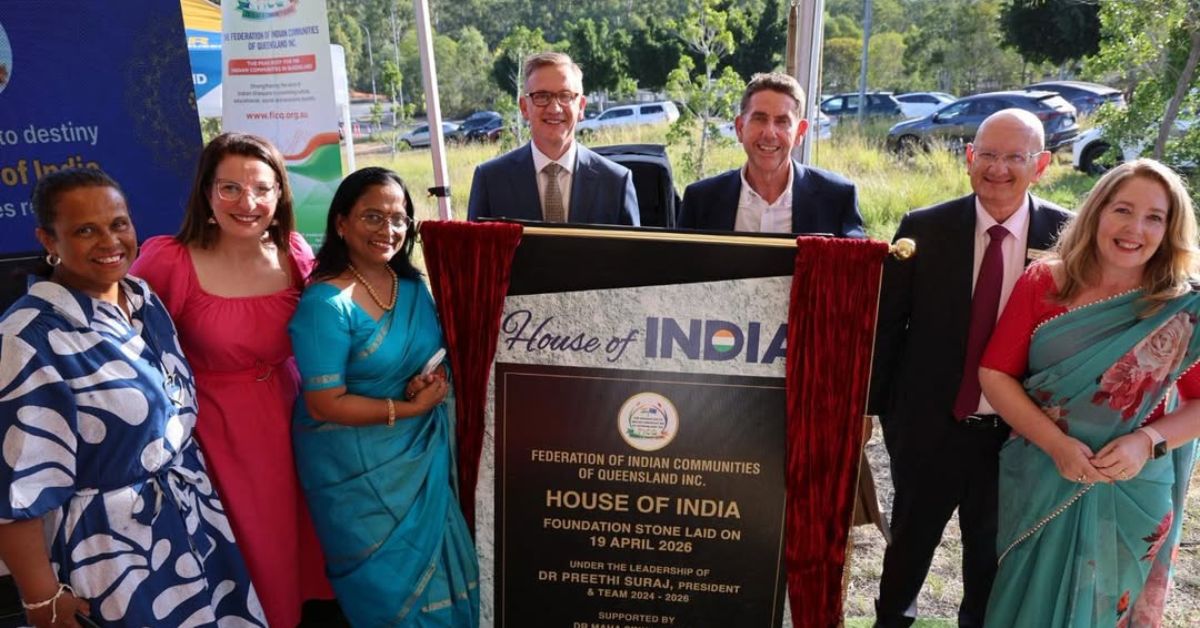
Queensland’s Indian community has reached a landmark moment, with the official foundation stone laying for the House of India taking place at the project site in Augustine Heights, marking the beginning of construction on what will be the first dedicated Indian cultural and community centre in Queensland.


The ceremony brought together community and faith leaders, who offered prayers and blessed the foundation stone before it was laid. A commemorative plaque was unveiled to mark the occasion.

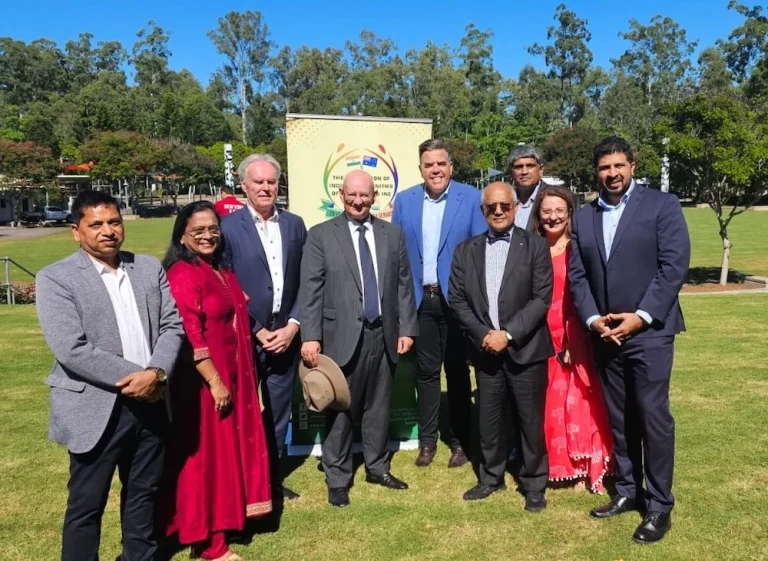
Local representatives joined Julian Hill, the Assistant Minister for Multicultural Affairs, to mark the occasion. They stood alongside members of the Springfield City Group and the local Indian community to witness the blessing of the site.

The project is backed by $5.5 million in funding, and is being delivered in partnership with the Federation of Indian Communities of Queensland (FICQ), the peak umbrella body representing more than 33 Indian organisations across the state.

The FICQ has championed the House of India concept for decades, and the foundation stone ceremony represents the moment a community’s long-held vision has finally moved from aspiration to ground.

A Home in Springfield

The choice of Greater Springfield as the location for Queensland’s first House of India reflects both the demographics of the region and a deeper thread of connection that runs through its history.

Around 10,000 people of Indian heritage now live in Ipswich and Greater Springfield, one of Australia’s fastest-growing urban corridors. The region’s very existence owes much to the vision of a man of Indian descent. Dr Maha Sinnathamby AM, Chairman and Founder of Springfield City Group, was born in Malaysia of Sri Lankan Tamil heritage and came to Australia in the 1970s.

In 1992, alongside business partner Bob Sharpless, he purchased nearly 3,000 hectares of economically depressed scrubland southwest of Brisbane for $7.9 million. The plan to turn it into a master-planned city required an Act of Parliament, which Queensland’s Parliament passed unanimously in 1997.

What grew from that purchase is now home to more than 53,000 residents, 12 schools, a hospital, a university and a rail connection to the broader South East Queensland network.

Greater Springfield has been recognised as the world’s best master-planned community by the International Real Estate Federation, and Sinnathamby has donated more than $200 million in land and funds to social infrastructure across the precinct. The House of India will become part of that legacy.

“I want to thank Springfield City Group and Chairman Dr Maha Sinnathamby for their vision,” said Mr Shayne Neumann at the ceremony.

A Decades-Long Dream Taking Shape

The FICQ was founded in 1998 as a non-profit umbrella body to give Queensland’s Indian diaspora a unified voice at every level of public life. It represents organisations whose members trace their heritage to mainland India, Fiji, South Africa, Malaysia and other communities of Indian origin.

Photo Credit: FICQ

FICQ President Dr Preethi Suraj has been a driving force behind the House of India project as it has moved through planning, funding and community consultation over the years.

“This project represents a shared dream to create a space where culture brings people together and diversity is celebrated,” Dr Suraj said.

The centre is designed to be much more than a venue for Indian cultural events, though it will certainly serve that function well. The House of India will provide dedicated meeting spaces for Indian community associations, host celebrations and festivals, and welcome multicultural and faith groups from across the region.

At the same time, it is designed to serve the broader Ipswich and Greater Springfield community with practical support services including crisis accommodation, community education programmes, language schools, sporting facilities and a commercial kitchen to support food relief efforts.

That dual purpose, deeply rooted in Indian cultural identity while genuinely open to the whole community, reflects how Queensland’s Indian diaspora has always operated: engaged, contributing and inclusive.

Built on Years of Contribution

The Indian community in Ipswich and Greater Springfield is one of the most highly educated and employed in Queensland. Its members work across medicine, engineering, information technology, education, small business and beyond, and have been part of the social and economic fabric of the western corridor for generations.

It was noted that the community has already contributed significantly to the region, and that the House of India provides a place that reflects that contribution back to them.

“With around 10,000 people of Indian heritage now living in Ipswich and Greater Springfield, this community makes a huge contribution to the region, and it’s time they had a place to call their own,” Mr Neumann said.

The Next Chapter

Construction is now underway following the foundation stone ceremony. For more information about the House of India project or to follow its progress, contact the Federation of Indian Communities of Queensland at ficq.org.au.


Published 26-April-2026

Close Enough to Hurt: Lions Overrun After Halftime in 89–44 Loss

For a half, Brisbane had control. On the scoreboard, they didn’t.

That gap told the story.

The Brisbane Lions set the tone early at Brighton Homes Arena, but a run of missed chances — and a five-goal third quarter from Port Melbourne — flipped the game hard, the Boroughs running out 89–44 winners in Round 5 of the 2026 VFL Premiership.

Fast Start, No Damage

Brisbane couldn’t have opened it better.

James Tunstill struck twice inside seven minutes, putting the Lions on the front foot and keeping the ball in their forward half.

But the damage never came.

Coleman missed first. Fullarton couldn’t convert. Mathieson and Sharp added behinds. Even the rushed scores pointed to pressure without polish.

By quarter time, Brisbane had control — but not separation.

Second Quarter Drift

The pattern held.

Deven Robertson snapped truly early in the second to extend the margin, but again the Lions couldn’t build. Fullarton missed again. Coleman added another behind. Reville and Michael both pushed chances wide.

Tunstill’s third late in the half should have given Brisbane breathing room.

Instead, it kept Port Melbourne within reach.

The Shift

Brisbane struck first in the third through Coleman, but the response came fast.

Port Melbourne worked through Abberley, then Weidemann, then Szust, before Signorello added another as the Boroughs built a run through the middle of the quarter.

The Lions found moments — Coleman again, Fullarton finally converting after multiple misses — but they couldn’t stop the flow.

Every time Brisbane scored, Port Melbourne answered.

By three-quarter time, the game had turned.

Chasing Too Late

Mathieson snapped one early in the last and gave Brisbane a brief lift.

It didn’t last.

Briskey responded. Manton extended the margin. Coleman’s third came with the result already slipping away, and O’Sullivan’s late goal only trimmed the final margin.

Port Melbourne didn’t surge late.

They controlled it.

Where It Slipped

Brisbane had early control and enough chances to build a lead.

They didn’t take them.

Port Melbourne stayed close, then built their run through the third quarter — five goals that shifted the game and held.

That was the difference.

Published 26-April-2026

Salvos Stores Opens Groundbreaking Ipswich Facility to Keep Fashion Waste Out of Landfill

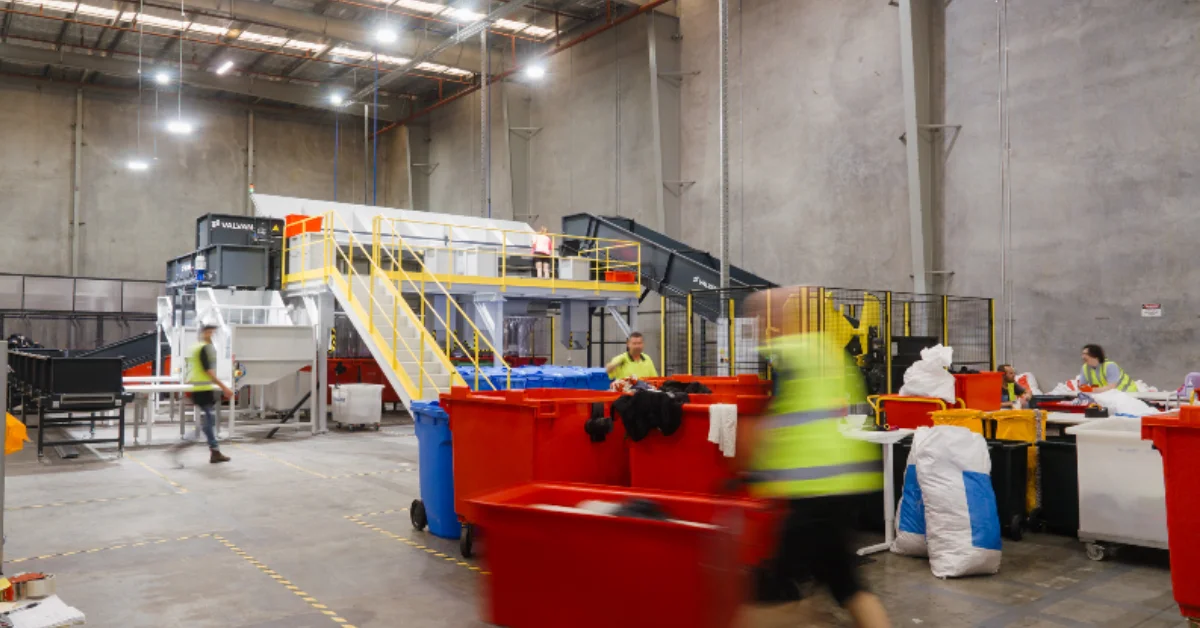
A facility in Carole Park is now the first of its kind in Australia, with Salvos Stores running an automated textile sorting and recycling operation at their Ipswich site.


Read: The Salvation Army Launches Flood Appeal to Assist in Relief Efforts and Beyond


The Ipswich facility uses advanced artificial intelligence to sort and decontaminate used textiles on a large scale, with the capacity to process up to 5,000 tonnes of clothing and other fabrics every year, diverting them away from landfill and into recycling or alternative uses.

Each year, an estimated 200,000 tonnes of clothing ends up in landfill nationally, making textile waste one of the world’s fastest growing environmental challenges. The Queensland Government, which has invested in the facility, says it is tackling one of the world’s fastest growing environmental challenges.

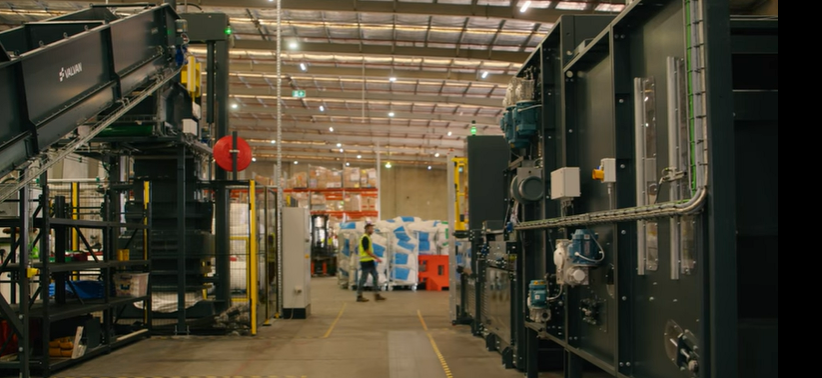
The technology behind the facility is world-leading. Salvos Stores has brought in Belgian automated sorting and decommissioning systems to handle the volumes of garments that can no longer be sold through its op shops.

Once processed, those textiles are sorted into clean, consistent bales that can be used for textile-to-textile recycling, insulation, or other manufacturing inputs. That consistency matters. According to Salvos Stores, having reliable and clean bales of textiles available by the tonne or container means that textile and fibre recyclers can plan to trial and scale their own operations.

Photo credit: YouTube/Salvos Stores

The facility comes as Salvos stores across the country are seeing a significant influx of donations. Meriel Chamberlin, business development manager at Salvos Stores, says some stores are currently turning over stock every five weeks, a rate on par with major fast fashion retailers.

With donations often overtaking purchases, a significant proportion of clothing that arrives at Salvos stores cannot be resold. Textiles at the Carole Park facility are assessed and processed through a hierarchy of outcomes. Items suitable for resale are sent back to Salvos Stores, keeping reuse as the highest-value pathway. Everything else goes through sorting and decontamination before being prepared for recycling or alternative uses.

The facility also enables new services, including take-back recycling programs for uniforms and other non-resalable clothing, which Salvos Stores says are now possible at scale.


Read: Community Cooking Group Builds Connection Through Shared Meals in Gailes


For locals who donate to Salvos stores across the Ipswich region, the facility offers reassurance that unsold clothing no longer has to end up in landfill. Australia’s fashion waste problem did not emerge overnight, and it will not be solved by a single facility. But the opening of the Carole Park site marks a meaningful shift in how the country approaches the end of a garment’s life, and Ipswich is now at the centre of that story.

Published 25-April-2026

Springfield Lakes Grandmother Allegedly Targeted in Armed Home Invasion While Undergoing Chemotherapy

A 62-year-old grandmother receiving cancer treatment was allegedly confronted by two armed intruders who broke into a Jupiter Street home in Springfield Lakes at around 3.30am on Saturday, with a 15-year-old local boy since charged over the alleged offence.


Linda Bray had been staying at her daughter’s home while undergoing chemotherapy when two offenders allegedly forced entry into the property armed with knives and a meat cleaver. Rather than speaking, one of the alleged intruders held a phone up to Bray’s face with a typed message: “This is a robbery.” The pair allegedly claimed to be part of a group of four and told her the family, including her grandchildren, were being held hostage elsewhere.

“That to me rips my heart out, they’re my grandbabies,” Bray said.

Despite the terror of the situation, Bray managed to find some dark humour in how the night ended. The pair allegedly stole a wallet, car keys, children’s shoes and a vape before attempting to make off with a vehicle parked outside. They abandoned the effort almost immediately after realising the car was a manual.

“They moved it back about a metre and then obviously worked out it was a manual and there was no ‘just put it into drive’ moment,” Bray said. “That was the funniest part.”

A Family Left Shaken

Bray was not physically injured during the alleged incident, but her daughter Sabra Brookes has spoken plainly about what the ordeal could have meant for her mother’s health. Chemotherapy places enormous physical and psychological strain on a patient, and unexpected trauma carries real medical risk.

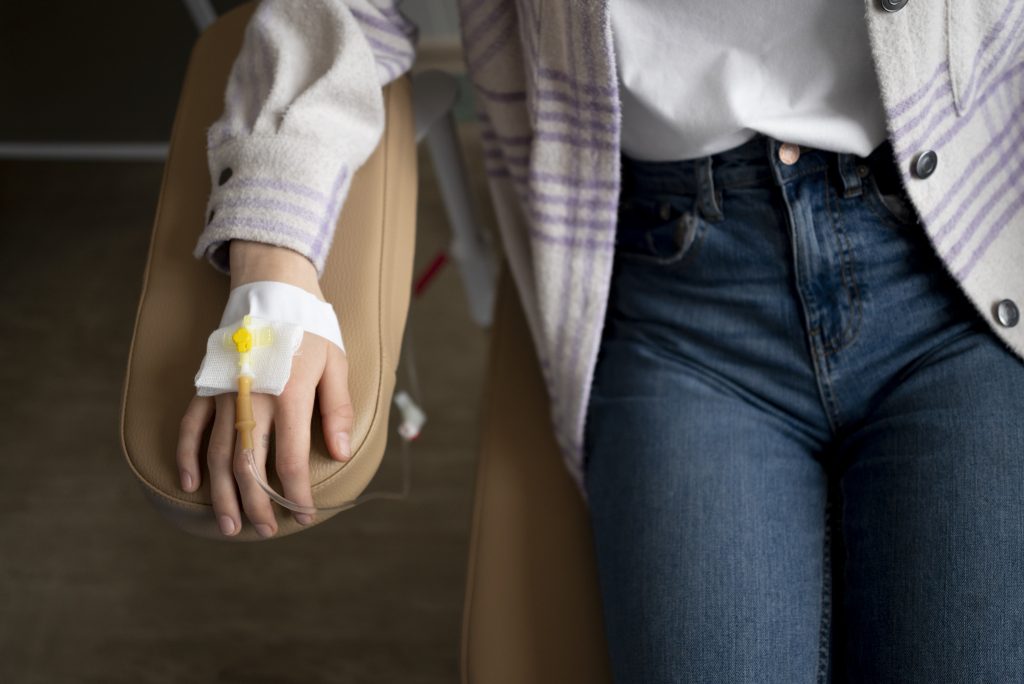
Stock photo of a patient getting chemotherapy
Photo Credit: Freepik

“These people could have just stopped you getting life-saving treatment,” Brookes said.

The weight of that sits differently when the victim is already fighting for her health. Bray is mid-treatment, staying with family precisely because she needs support, and the home she was staying in on Jupiter Street became the scene of an alleged violent robbery in the early hours of a Saturday morning.

Teen Charged, Second Offender Still at Large

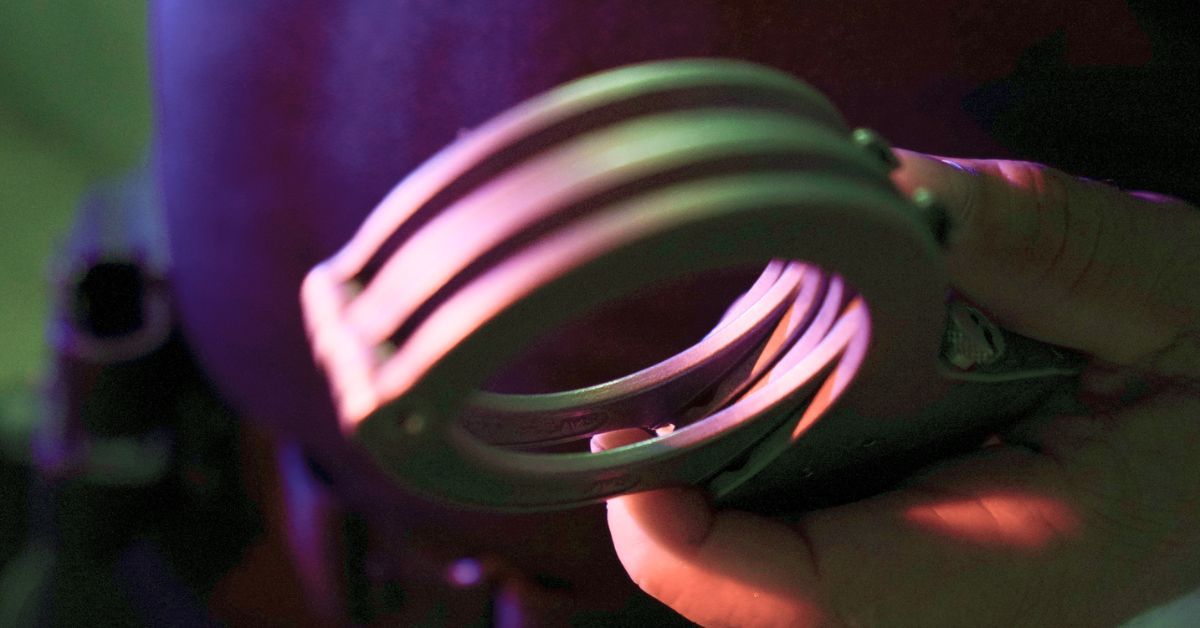
Queensland Police charged a 15-year-old Springfield Lakes boy on Monday afternoon. He faces two counts of entering premises and committing an indictable offence, along with one count each of entering a dwelling with intent while armed and armed robbery. He is being dealt with under the provisions of the Youth Justice Act.

The second alleged offender has not yet been located, and investigations remain ongoing. Police are urging anyone who was in the area of Jupiter Street, Springfield Lakes, on Saturday morning and has CCTV or dashcam footage, or anyone with information about the incident, to come forward.

Anyone with information can contact Crime Stoppers on 1800 333 000.


Published 16-April-2026

Springfield Lakes Playground Puts Local Students on Path to Olympic Sport

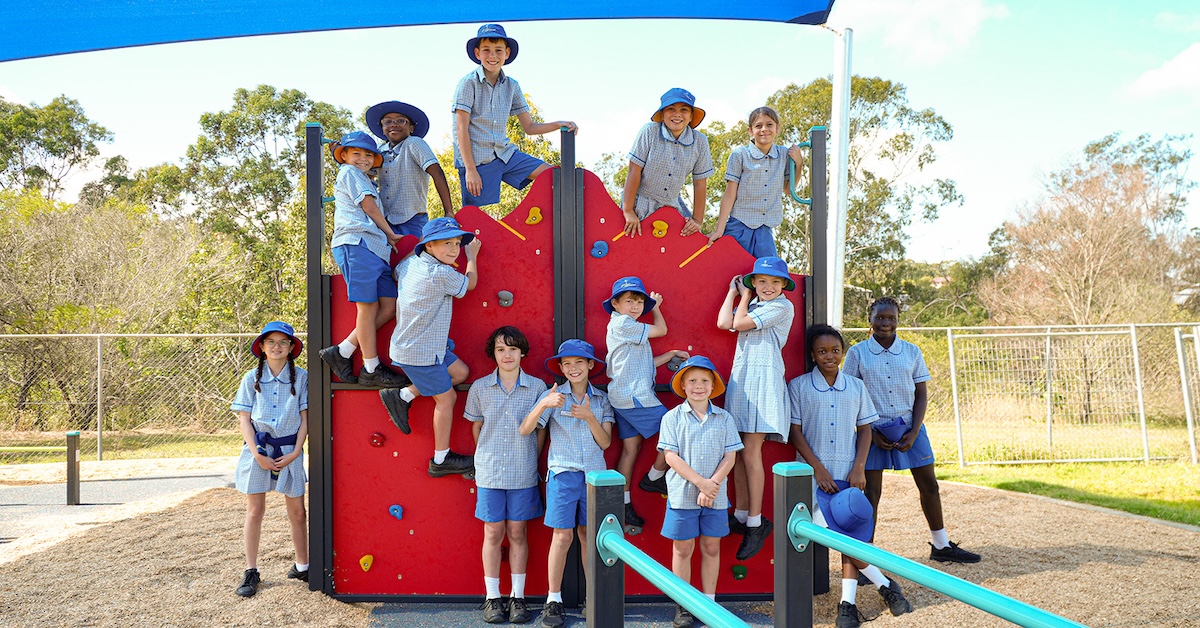
The sound of schoolyard play has taken on a different rhythm in Springfield Lakes, as students at Good Shepherd Catholic Primary School move across ropes, bars and walls in ways that echo a sport headed for the Brisbane 2032 Olympics.


On April 23, that energy took shape during a guided session led by Emma Teede, president of Obstacle Australia and a former Australian Ninja Warrior competitor, at the school’s new Ninja Warrior Playground. Students worked through the course step by step, gripping climbing holds, testing their balance and building the strength needed to complete each section. 

It might look like play at first glance, but it reflects a wider shift in sport, where obstacle racing is becoming part of modern pentathlon at the Olympic level.  

A Schoolyard That Mirrors a Changing Olympic Sport

The new playground at Good Shepherd is more than a place to pass the time between lessons. It has been designed as part of a structured program that introduces students to the physical demands of modern pentathlon. 

The sport is now evolving to include obstacle racing in place of its traditional equestrian component. This change has been confirmed by international sporting bodies ahead of the Los Angeles 2028 Games and is expected to continue into Brisbane 2032.

It brings a new relevance to what students are practising each day.  The movements learned in the course, from climbing to balance and quick transitions, reflect the same skills now being developed at elite levels.

Learning From the Sport’s Grassroots Leader

Ms Teede’s role in the session provided a direct connection to the sport as it exists beyond the school setting. As president of Obstacle Australia, she has been involved in shaping the growth of obstacle racing across the country, guiding its move from recreational challenge to organised competition.

Her session with students focused on technique and progression, encouraging them to approach each obstacle with focus and persistence. The experience offered a glimpse into how the sport is taught and developed, while keeping the emphasis on participation and enjoyment.

Photo Credit: Supplied

Building Strength, Confidence and Access

Teachers at Good Shepherd have framed the course as a way to support more than physical ability. As students move through the obstacles, they are developing coordination and endurance, but also learning to manage challenges and build confidence in their own progress.

The program also reflects a practical approach to participation in sport. With rising costs affecting access to organised activities, the school has created a space where students can be active as part of their daily routine. The playground becomes a consistent and inclusive option, open to all students regardless of background.

“At a time when cost‑of‑living pressures can limit access to organised sport, this playground provides students with a free, inclusive and healthy outlet where they can be active every school day,” Good Shepherd Catholic Primary School Physical Education teacher Eliza Moore said. 

Springfield Lakes in the Frame for 2032

Springfield Lakes has featured in early discussions around Olympic planning, with Ipswich Stadium, known as Brighton Homes Arena, identified in earlier proposals as a possible venue for modern pentathlon. 

“With Lions Stadium at Springfield currently being considered as the venue for the Modern Pentathlon at the 2032 Olympic Games, this new playground gives our students in the Ipswich region a meaningful connection to a potential home‑ground Olympic legacy,” Ms Moore said. 


Published 23-April-2026

Bellbird Park Altercation Leaves Two Men in Critical Condition After Suburban Fight

Two men were taken to hospital in a critical condition after an alleged violent altercation in Bellbird Park, where a suburban argument escalated into a group fight in which a bladed weapon and a garden hedging tool were allegedly used.


Argument Leads To Alleged Assault In Bellbird Park

The incident occurred just after 2 pm at a residential address in Bellbird Park, where a verbal disagreement between several individuals escalated into a physical confrontation. A 22-year-old man is alleged to have punched a 25-year-old Ipswich man and pulled him into the garage of the residence.

Inside the garage, a 21-year-old man is alleged to have used a bladed weapon to strike the 25-year-old four times around the torso area. The 22-year-old man is then alleged to have used a garden hedging tool to strike a 24-year-old Augustine Heights man in the chest and back.

police investigation
Photo Credit: QPS/Facebook

Fight Continues Onto Nearby Streets

The group, including several witnesses, continued to fight as the altercation moved out onto nearby streets. The 25-year-old man was later located in Eagle Street, while the 24-year-old man was found in Coleen Street in nearby Redbank Plains.

Both men were transported to Princess Alexandra Hospital in a critical condition following the incident.

Bellbird Park fight
Photo Credit: QPS/Facebook

Arrests Made Following Incident

Police attended the scene and located those involved. The 22-year-old Bellbird Park man was found in Eagle Street and transported to Ipswich Hospital for treatment for minor injuries before being arrested and charged with two counts of acts intended to cause grievous bodily harm.

The 21-year-old Bellbird Park man was later intercepted in Alice Street in Goodna just after 9pm and was also charged with two counts of acts intended to cause grievous bodily harm.

Court Appearance To Follow

Both men have been held in custody and are due to appear before the Ipswich Magistrates Court.


Police have appealed for information as inquiries continue into the circumstances surrounding the Bellbird Park incident.

Published 21-Apr-2026

East Street Central Project Brings Nearly 5,000 Square Metres of New Office Space to Ipswich CBD

A major three-building commercial development at the corner of East and Brisbane Streets in Ipswich is moving toward a formal development application, with the East Street Central project set to deliver close to 5,000 square metres of new office space into one of Queensland’s tightest CBD office markets.


Developed by Brisbane-based Allamanni Developments, the project addresses a vacancy rate of just three to five per cent across Ipswich’s CBD, a figure the developer describes as among the lowest in the country and a clear signal that demand for quality commercial space in the city has outrun supply.

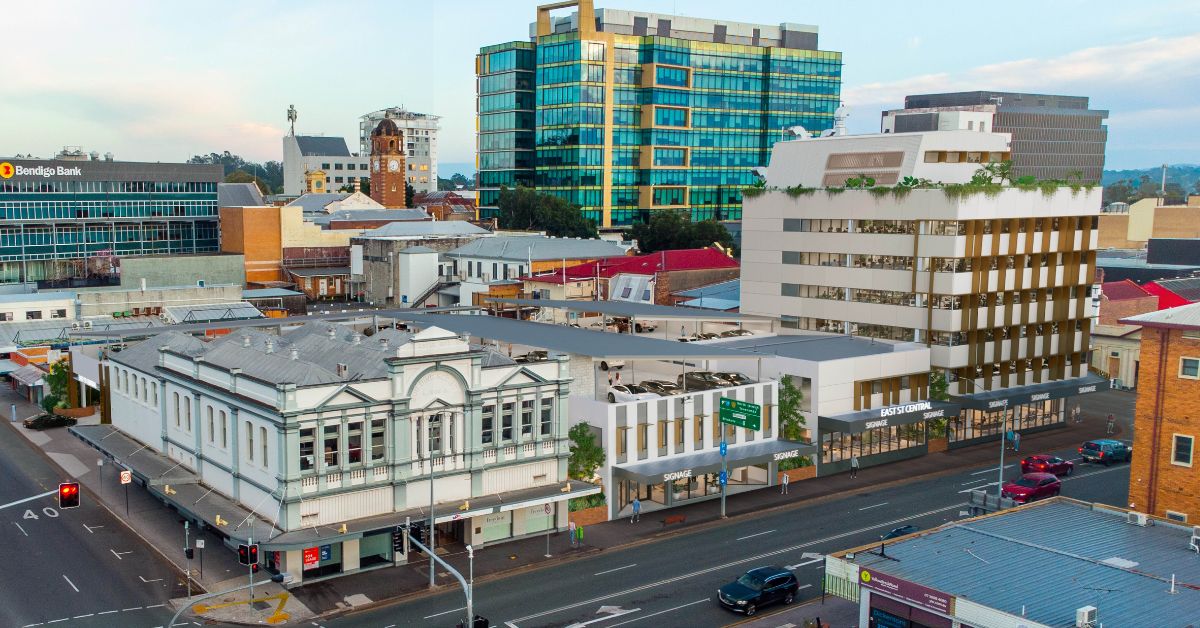
The development encompasses three existing buildings: the six-level tower at 78 Brisbane Street, a boutique two-storey building at 41 East Street, and the heritage-listed building at 45 East Street, combining a total net lettable area of 4,807 square metres across the site.

After two years of planning, the project is now edging toward lodging a formal development application.

Three Buildings, One Coherent Vision

Each of the three buildings brings something distinct to the project. The tower at 78 Brisbane Street, originally built in 1974, anchors the development with 2,900 square metres across six levels and is set for a comprehensive refurbishment. The works will include a new facade, energy-efficient air-conditioning and lighting systems, two high-speed lifts, a rooftop staff breakout terrace and newly created secure onsite parking, repositioning the building as premium commercial accommodation within the Ipswich market.

Project by Allamanni Developments
Photo Credit: Allamanni Developments

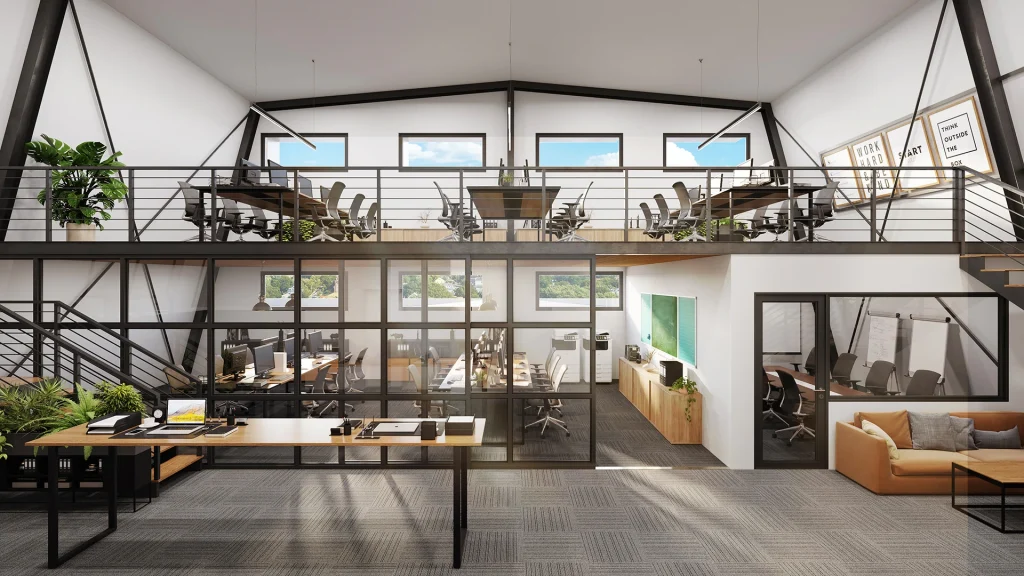
Between the tower and the heritage building, the boutique property at 41 East Street adds 825 square metres across two levels. With high ceilings, an open-plan layout and a new fitout, lift and upgraded amenities, it targets smaller tenants looking for character workspace with strong connectivity to the CBD’s retail and dining offer.

The historically significant 45 East Street carries one of Ipswich’s most layered civic stories. F.D.G. Stanley, Queensland’s Colonial Architect from 1873 to 1881, designed the 1888 building for the Ipswich and West Moreton Building Society. Founded in 1877 as the city’s first such institution, the society provided essential housing finance for the growing colony.

Stanley’s legacy lives on through this heritage-listed site, which was constructed in three stages starting in 1888. Now fully refurbished and leased, the 1,082 square metre building provides premium character workspace featuring high ceilings, natural light, and a signature lobby.

A City on the Rise: Ipswich Today

Allamanni Acquisitions Manager Irina Monnier frames the project against the backdrop of Ipswich’s broader trajectory. The city’s population is projected to exceed 456,000 by 2041, and the developer points to a $3.8 billion infrastructure investment pipeline as context for the commercial confidence underpinning the development.

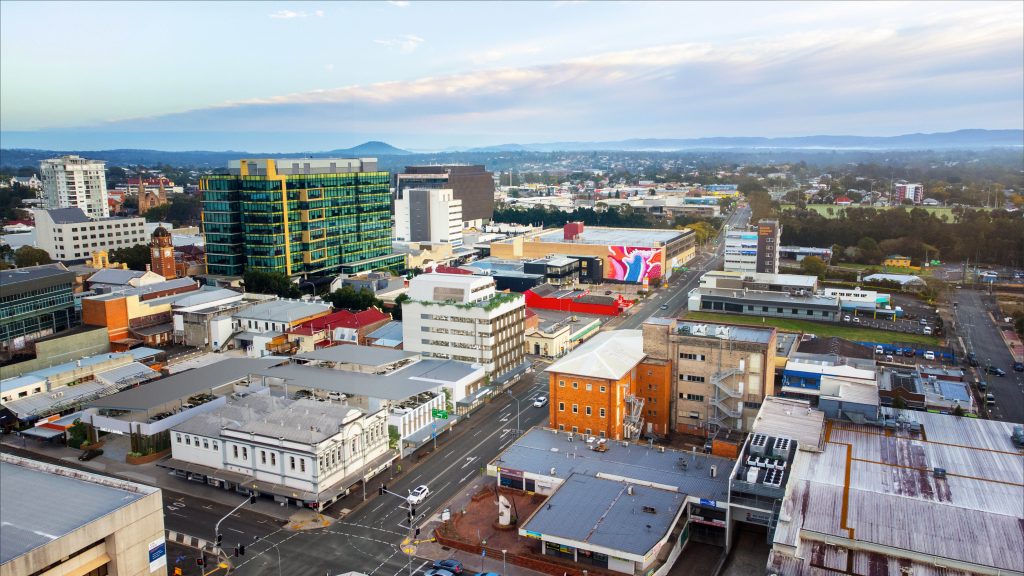
The site’s position within walking distance of the hospital, courts, civic precinct and rail connections makes it particularly suited to professional services, healthcare and public sector tenants, the kinds of occupiers who need CBD presence and reliable access rather than fringe flexibility.

Photo Credit: Allamanni Developments

The comparison Monnier draws is deliberate. She describes Ipswich as sitting at a similar inflection point to where Parramatta was roughly two decades ago: a regional city with genuine economic weight, a strong population growth outlook and a commercial property market where quality supply has not kept pace with demand.

Whether that comparison ultimately proves accurate will depend on factors well beyond a single development, but the logic of the moment is clear enough. The East Street Central site sits beside Ipswich’s revitalised Nicholas Street precinct and has the kind of civic-scale adjacency that makes it legible to tenants looking for a credible CBD address rather than suburban office park convenience.

Photo Credit: Allamanni Developments

A Heritage Lane in a Growing City

For Ipswich residents, the East Street Central project carries a significance that goes beyond square metres. The restoration of the 1888 building at 45 East Street keeps a piece of the city’s financial and civic history in productive use, rather than allowing it to drift toward vacancy or redevelopment pressure.

The Ipswich and West Moreton Building Society occupied the building from 1888 until 1996, a span of over a century, and the building’s already-full tenancy suggests there is genuine appetite for character space in the CBD when it is presented well.

The project is currently available for lease and sale inquiries across the tower and boutique buildings. Leasing and contact information for East Street Central is available through Allamanni Developments at allamanni.com.au or by phone on 1300 318 756.


Published 20-April-2026

New 24-Hour Fire and Rescue Hub to Protect Springfield Lakes Region

A powerful new firefighting force is preparing to move into the Springfield Lakes area to ensure emergency response times remain fast as the local population surges.


A Strategic Hub for Rapid Response

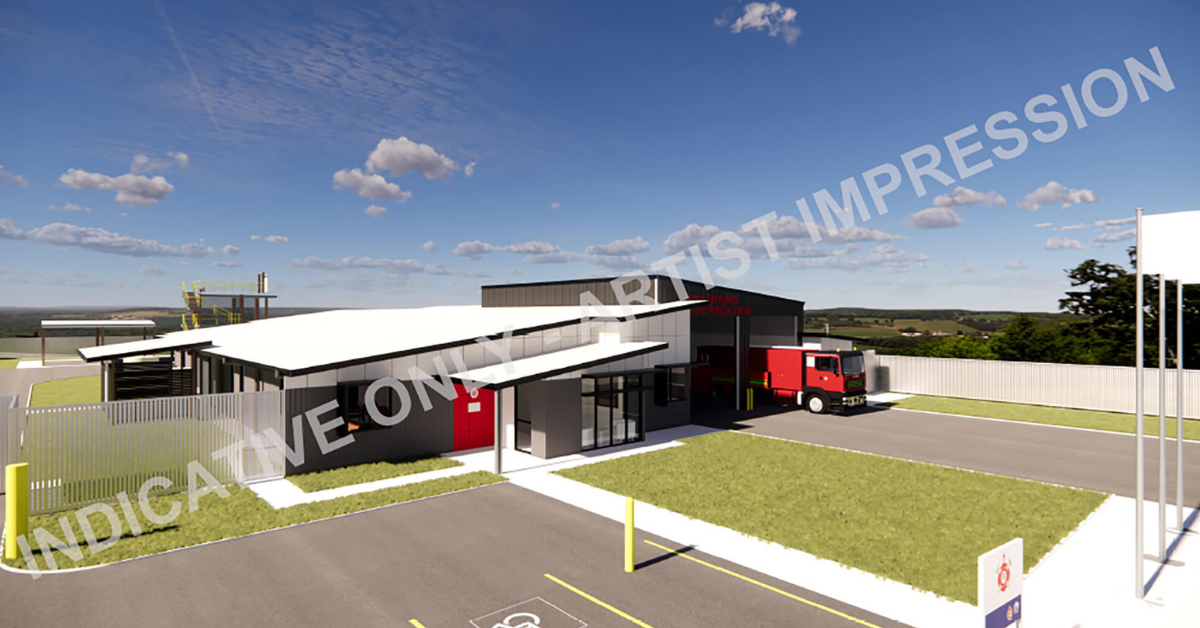
The new facility represents a significant upgrade for emergency services in one of the fastest-growing pockets of Queensland. Situated on Gateway Drive in Augustine Heights, the station sits right next to the existing ambulance centre. This specific spot was chosen because it allows crews to jump onto major roads quickly. 

By placing fire and medical teams side-by-side, the region gains a more coordinated response to accidents and fires. The reach of this station is broad, covering a massive area that spans from Redbank down to Greenbank and across from South Ripley to Carole Park.

Advanced Gear and Round-the-Clock Crews

Inside the ten-million-dollar facility, the focus is on high-performance equipment and constant readiness. The station will be home to powerful firefighting trucks designed to pump 4,500 litres of water every minute. To ensure help is always available, the site will be staffed 24 hours a day, 365 days a year. 

A dedicated team of 19 firefighters and five station officers will call this new space home, providing a permanent presence that aims to cut down response times and provide peace of mind for local families.

Planning for a Growing Population

The project is a major piece of a larger 36-million-dollar plan to upgrade emergency services across Queensland, with other stations being built in areas like Beerwah and Caloundra. Experts predict that the population in this region could double over the next two decades, making this infrastructure a vital long-term investment. 

While there have been different reports on the exact timeline, the most recent projections suggest the station will be fully operational in 2026. This new addition will work in tandem with existing stations in Camira and Ripley to create a more resilient safety network for the entire western corridor.


Support for Local Frontline Workers

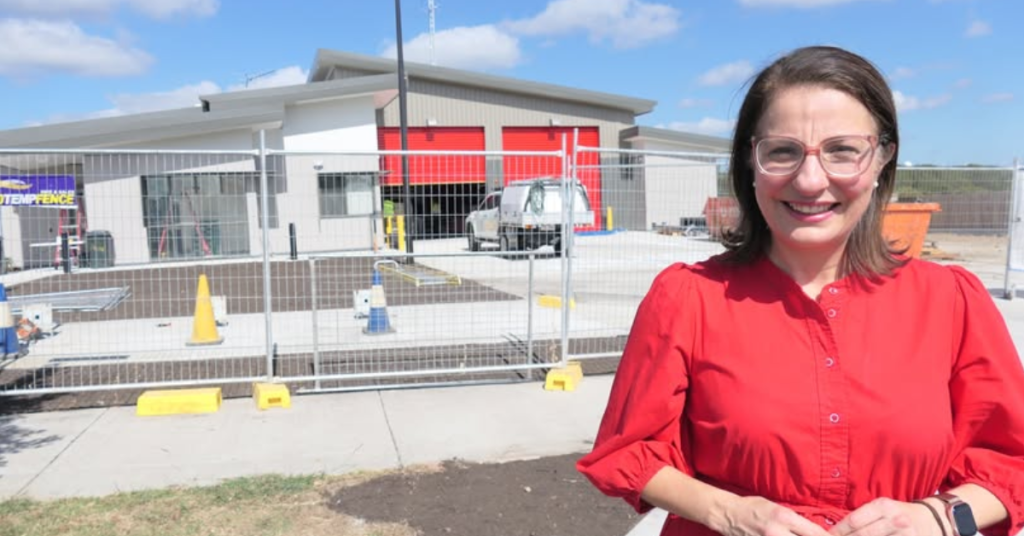
Fire and Disaster Recovery officials have noted that this project is about more than just a building; it is about giving frontline workers the tools they need to succeed. Fire and Rescue Commissioner Steve Smith explained that the department identified this location as the best possible choice to handle the increasing pressure on local services. Government representatives have also pointed out that the facility addresses a long-standing need for better resources for crews who have been stretched thin. With construction moving through the final stages of earthworks and building, the move into this modern space is expected to give local firefighters a much-needed boost in morale and capability.

Published Date 16-April-2026

World’s Fastest Teenager: Gout Gout Sets 19.67-Second 200m Record

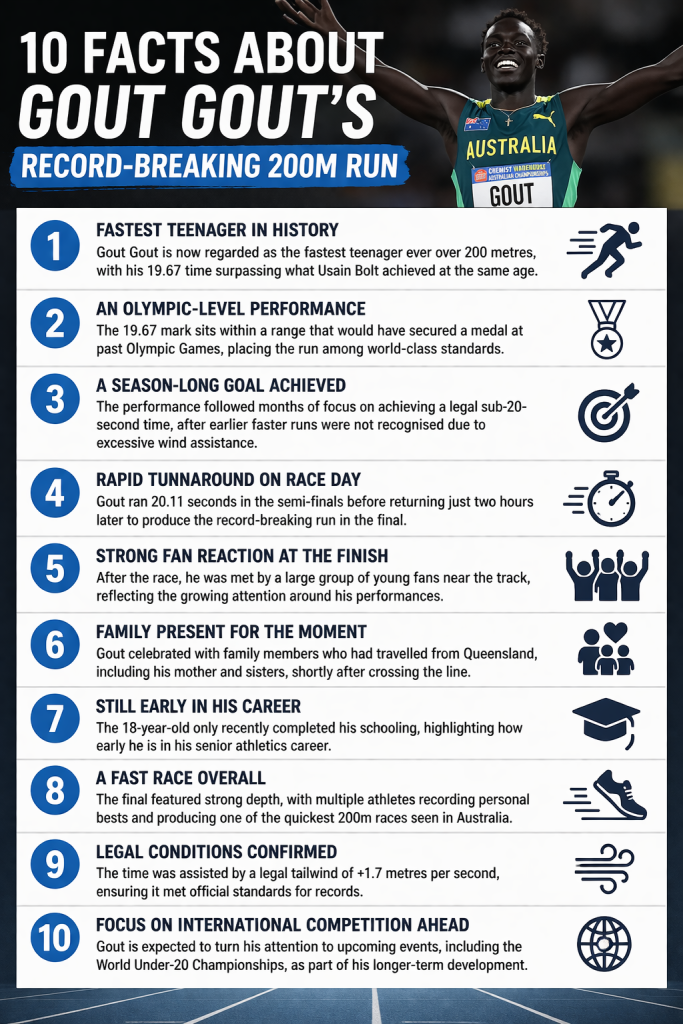
A new benchmark has been set in Australian sprinting, and it came from a teenager already carrying big expectations. Ipswich-born Gout Gout delivered a 19.67-second run in the men’s 200 metres at the Australian Athletics Championships, rewriting the national record and placing himself among the fastest young athletes the sport has seen.


The 18-year-old’s run marked the first time he has gone under 20 seconds with legal wind assistance, ensuring the result stands officially. The time places him among the fastest under-20 athletes in history, moving beyond what Usain Bolt achieved at the same age and behind only Erriyon Knighton in that category.

The performance has been widely framed as world-class, with the 19.67 mark sitting within a range that would have secured a medal at any Olympic Games in history.

Clear conditions follow months of setbacks

Gout’s record came after a period where conditions had repeatedly worked against him. Over the past year, several of his fastest runs had been assisted by wind beyond allowable limits or affected by cold and wet weather, preventing official recognition of sub-20 times.

On the morning of the final, clear skies and favourable conditions marked a change. Wind remained a key focus throughout the day, particularly after inconsistent readings in the semi-finals. When the final wind reading showed +1.7 metres per second, just under the legal limit, the result was confirmed.

The time also followed a structured build-up. Gout ran 20.11 seconds in the semi-finals before returning two hours later to produce the record-breaking performance.

A race shaped by pressure and pace

The final itself was not a one-sided contest. Aidan Murphy produced a career-best 19.88 seconds, challenging strongly through the bend and into the straight. At one stage, the pair were level, requiring Gout to respond late in the race.

His final stages proved decisive, with a strong finish over the closing metres separating him from the field. The race overall was notable for its depth, with multiple athletes recording personal bests.

The result reinforced the quality of the performance, with two athletes breaking the 20-second barrier in the same final.

Kennedy connection remains central

The championships had already drawn attention following the performance of Lachlan Kennedy, who won the 100 metres title in 9.96 seconds. His result made him the first Australian to break the 10-second barrier on home soil and set the tone for the weekend.

There had been expectations of a direct contest between Kennedy and Gout in the 200 metres, particularly after recent meetings between the pair. However, Kennedy withdrew on race day due to soreness following his 100m efforts.

Despite not competing, Kennedy remained part of the narrative. He had earlier communicated his support to Gout after withdrawing, and his performances across the championships contributed to the momentum surrounding Australian sprinting.


A performance built on intent and progression

Gout’s run followed a period of focused preparation, including a clear target to achieve a legal sub-20-second time. His progression has been steady in recent years, including breaking long-standing national marks as a junior and advancing to international competition, where he reached the semi-finals at the world championships.

The result is also notable given his stage of development. Having only recently completed his schooling, Gout remains early in his senior career while already producing times at the elite level.

Strong response from the crowd and the team

Following the race, Gout was met by a large group of spectators near the track, reflecting the level of interest in his performance. He later joined family members in the stands, including relatives who had travelled from Queensland to watch the event.

Members of his support team, including his coach and manager, were also present on the track shortly after the finish, as the result was confirmed.

Focus turns to international competition

With the national championships complete, attention now shifts to upcoming international events. Gout is expected to focus on the World Under-20 Championships as part of his development, rather than competing across all major meets.

His performance signals a shift in the country’s presence in the event. Alongside Kennedy’s 100m result, it points to a broader change in the depth and standard of men’s sprinting.

Published 13-April-2026