




Springfield HOPE Hub Opens at Orion Springfield Central for Domestic and Family Violence Victim-Survivors

The Springfield HOPE Hub has officially opened its doors at Orion Springfield Central, giving women and children escaping domestic and family violence in the Ipswich region a safe, confidential, and accessible place to seek help close to home.


Read: New HOPE Hub Planned At Springfield Central


The hub, operated by Beyond DV, is the first of three planned hubs to be established under a $7.8 million, five-year investment in wrap-around recovery services. It joins an existing hub at Carindale, with more locations to follow.

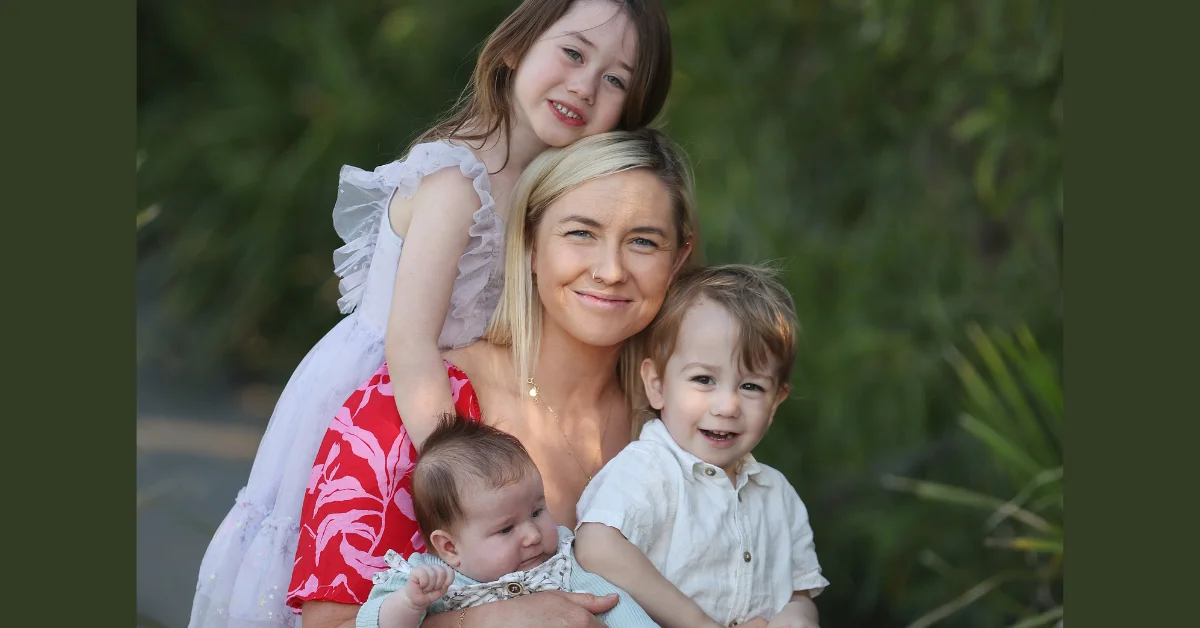
Photo credit: Facebook/Beyond DV

The Springfield HOPE Hub offers victim-survivors access to a broad range of services under one roof, including trauma-informed counselling, social, health, housing, legal, and financial assistance. Designed with privacy and comfort in mind, the space features a welcoming reception area, private consultation rooms for confidential counselling sessions, a training room, and a balcony breakout space. It is staffed seven days a week by a trained counsellor, coordinator, and receptionist.

A Space Where People Can Simply Walk In

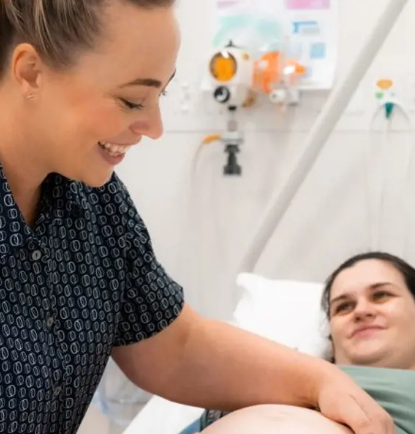
Photo credit: Facebook/Beyond DV

The choice of a shopping centre location reflects a broader philosophy around accessibility and reducing stigma. Beyond DV Founder and Managing Director Carolyn Robinson said the Orion Springfield Central location was key to making support more reachable for those who might otherwise never ask for it.

“Having the Springfield HOPE Hub located within Orion Springfield Central helps make support more visible, approachable and accessible for people who may otherwise never seek assistance,” Ms Robinson said.

“The HOPE Hub model is designed to remove barriers to support by creating a safe environment where people can walk in, ask questions, seek advice and access practical help provided by trained staff, seven days a week.”

Photo credit: Facebook/Beyond DV

Mirvac Orion Springfield Central Portfolio Manager Melanie Hodge said the opening was a milestone she was truly proud of.

“Shopping centres sit at the heart of local communities, and by hosting this trauma-informed, wrap-around support service, we have an opportunity to make a genuine difference in the lives of victim-survivors of domestic and family violence across the Springfield region,” Ms Hodge said.

Ipswich Mayor Teresa Harding welcomed the opening, pointing to the city’s rapid growth as reason to have support services available close to home.

“Ipswich is the fastest growing city in Queensland, with Springfield and neighbouring Ripley at the forefront of this growth. Having the new HOPE Hub opening in Springfield will ensure Ipswich families can reach the support they need, close to home,” Mayor Harding said.

Minister for the Prevention of Domestic and Family Violence Amanda Camm said shopping centres were “ideal locations for these hubs, offering an accessible entry point for victim-survivors while reducing the stigma often associated with seeking help.”


Read: New Ripley Police Station Opens as Ipswich District HQ, Strengthening Local Policing


The Springfield HOPE Hub represents a tangible, community-level response to domestic and family violence in the region. Whether someone is in crisis or simply looking for information, the hub’s doors are open seven days a week.

For more information or to access support, visit the Beyond DV website at beyonddv.org.au.

Published 28-May-2026

Giants Rip Lions Apart In Historic Third-Quarter Meltdown As Brisbane’s Familiar Problem Returns

For most of the first half, this looked like the sort of contest Brisbane would happily grind through.

The Lions were under pressure at times, particularly when Greater Western Sydney moved the ball quickly and got their dangerous forwards involved, but they stayed close enough to remain firmly in the contest. Eight lead changes before half-time reflected how even the game had been, with neither side able to establish meaningful control.

By the main break, the Giants led by just six points. Brisbane had every reason to believe the afternoon was still there to be won.

Instead, it turned into one of Brisbane’s worst third-quarter collapses in recent memory.

Greater Western Sydney’s third-term explosion was not merely decisive; it was historic. The Giants slammed on 14.2 (86), the highest third-quarter score recorded in V/AFL history, transforming what had been a live contest into a complete dismantling. By the time the final siren arrived at Engie Stadium, Brisbane had been beaten 26.10 (166) to 13.10 (88) in Round 11 of the 2026 Toyota AFL Premiership.

For a side with genuine premiership ambitions, the margin alone is troubling. The bigger concern is that the warning signs had already been there.

The Game Brisbane Thought It Was Playing

Conor McKenna’s opening goal gave Brisbane the ideal start, the Irishman gathering cleanly and finishing with the kind of confidence that suggested the visitors had settled quickly.

That impression held for much of the first half.

Toby Greene was influential early, Jake Riccardi found dangerous positions inside 50, and the Giants repeatedly looked capable of putting together quick bursts of scoring. Brisbane, though, did enough around stoppage in the first half to stay in touch.

Lachie Neale worked tirelessly in traffic, Charlie Cameron capitalised on an opposition mistake, and Cam Rayner looked threatening whenever the ball came near him. There was pressure, intensity and momentum swings, but also enough resilience from Brisbane to suggest this was a genuine contest between two quality sides rather than a one-sided ambush in waiting.

At half-time, nothing about the scoreboard hinted at what was about to follow.

When The Match Got Away Completely

The unraveling began almost immediately after the restart.

Phoenix Gothard struck within seconds, but even then there was no obvious indication Brisbane was about to disappear from the contest altogether. What followed, however, was the sort of collapse that can leave a side searching for explanations long after the final siren.

Jake Stringer imposed himself physically. Aaron Cadman joined the scoring. Greene became almost impossible to contain. Brent Daniels repeatedly drove the Giants forward, and once Brisbane began losing territory, possession and composure in quick succession, the match accelerated away from them.

The most alarming aspect was not simply the volume of scoring, but the complete absence of any meaningful response.

The Giants hurt Brisbane from turnover, from stoppage and in transition. Every attempted adjustment felt temporary at best. By the middle of the quarter, Brisbane had lost any meaningful control.

Chris Fagan offered no softened interpretation afterwards.

“They played an unbelievable third quarter,” he said.

“When you look at the scores, we lost the first quarter by six, we evened the second quarter, and we won the last quarter. But we lost this third quarter by 83 points. We got smashed everywhere — at the contest and ball movement. We couldn’t stop it; they just controlled the game.”

It was an unusually stark assessment, but not an inaccurate one.

The More Concerning Part Is That This Keeps Happening

If this had arrived in isolation, Brisbane might simply absorb the embarrassment and move on.

Fagan made clear that is not how he sees it.

The Lions have now been badly exposed after half-time for three consecutive weeks, first against Carlton, then Geelong, and now in far more dramatic fashion against the Giants.

“Unfortunately, and to be truthful, our third quarters have been a problem for us for the last three weeks,” Fagan said.

“We had a good lead against Carlton a few weeks ago and squandered a fair bit of that in the third quarter. Geelong got us in the third quarter last week, and it happened again today. We need to have a talk with the group and work out what’s happening there.”

That is where the real significance of this result lies.

Every contender has a poor afternoon. Repeated collapses in the same phase of matches suggest something more structural — whether physical, tactical or mental — and Brisbane currently looks vulnerable in exactly the areas that successful September sides are normally built on.

A Better Final Quarter, But Little Comfort

To their credit, the Lions did not completely abandon the afternoon.

Logan Morris ended a lengthy goal drought in the final quarter, Rayner continued to compete, and Brisbane at least showed enough resistance to avoid the sort of total surrender that would have made the result even uglier.

Fagan acknowledged that response, though only in relative terms.

“The body language wasn’t good,” he said.

“I talked to them about that at three-quarter time and said, ‘Now, the challenge is this last quarter. Can we actually turn it around and get something out of the game for next week?’”

There was some response, but not enough to materially change the reading of the afternoon.

Stringer and Greene each finished with five goals, Clayton Oliver controlled the midfield with 37 disposals and 11 clearances, while Finn Callaghan still managed to influence the game despite close attention from Josh Dunkley.

For Brisbane, Neale battled hard, while Rayner and Kai Lohmann each kicked three.

The Timing Could Hardly Be Worse

The Lions now have a meeting with ladder leaders Fremantle.

That would be a daunting assignment under any circumstances. Carrying a recurring issue that has now been exposed three weeks in succession makes it considerably more uncomfortable.

Because what Brisbane produced in that third quarter looked less like a bad patch and more like a side losing its grip on the things it normally does best.

Final Score
GWS GIANTS 26.10 (166) def Brisbane Lions 13.10 (88)

Published 25-May-2026

New Redbank First Aid Training Venue Opens for Brisbane’s Western Corridor

My First Aid Course has opened a new training venue in Redbank, giving residents across Springfield Lakes, Goodna, Collingwood Park, Riverview, Ipswich and surrounding western corridor suburbs a locally accessible option for CPR and first aid certification without travelling into central Brisbane.


The Redbank venue is one of two new locations the Brisbane-based provider has recently launched, alongside a new venue at 74 Station Road in Indooroopilly.

Together they bring My First Aid Course’s Brisbane network to eight locations, spanning the city’s north, south, east and now its western and inner-western corridors, with the Redbank site sitting closest to the outer south-west growth suburbs.

Easier access for the western growth corridor

My First Aid Course trainer Mal Thompson said convenience is what ultimately determines whether people stay current with their first aid certification. “If people can attend closer to home, they are more likely to stay current and more likely to remember what to do when it counts,” he said.

Photo Credit: My First Aid Course

“The first few minutes of an emergency matter. We want more people to feel confident stepping in, whether that is at work, at a sports field, at home, or in a shopping centre.”

That friction — the time, the parking, the distance — is particularly real for the western corridor. Springfield Lakes alone has grown substantially since its first residential stages opened in the late 1990s, and its residents work across construction, logistics, healthcare, childcare, disability support, aged care and retail, industries where first aid certification is often a mandatory workplace requirement.

Photo Credit: Google Maps

The Redbank venue runs bi-weekly first aid and CPR courses, delivering both standard and advanced workplace-ready training, giving the corridor reliable and regular access rather than an occasional offering.

A training model built around flexibility

My First Aid Course uses a blended learning format, with most theory completed online at each student’s own pace, followed by a short practical assessment at the venue. The HLTAID011 Provide First Aid course, the standard requirement for most workplaces, schools and community organisations, requires a two-hour practical session after online pre-reading is complete.

Photo Credit: My First Aid Course

The CPR-only course (HLTAID009) requires a short face-to-face practical session in person.

The practical component covers CPR technique, defibrillator awareness, emergency scenario management and hands-on skills that cannot be developed through online learning alone.

Photo Credit: My First Aid Course

Certificates are issued the same day on weekdays when online prerequisites are completed in advance, making it straightforward for workers who need documentation quickly for a new role or compliance renewal.

The provider has 30 years of professional training experience, and all trainers hold the TAE40122 Certificate IV in Training and Assessment. Courses are delivered through Allens Training Pty Ltd RTO 90909, a nationally registered training organisation, meaning certificates are recognised across Queensland and Australia.

The courses now available in Redbank

The Redbank venue offers CPR (HLTAID009, currently $49), first aid (HLTAID011, $98), childcare first aid (HLTAID012, $123) and advanced first aid, covering the full range of certifications most residents and workplaces in the western corridor are likely to need. Onsite group bookings are also available for workplaces wanting to train multiple staff members without requiring them to travel.

For small businesses, childcare centres, trade teams and community organisations in Springfield Lakes and surrounding suburbs, having a venue this close makes compliance renewals considerably easier to manage.

To book or view upcoming course dates at the Redbank venue, click here.


Published 20-May-2026

Springfield Lakes Shatters Real Estate Records With Historic Local Sale

Springfield Lakes has officially entered a new era of property growth after a local real estate agent secured the neighbourhood’s first-ever two-million-dollar residential sale.


A New Suburban Benchmark

The residential property at 22 Lady Musgrave Drive recently changed hands for $2.05 million. This outcome represents a major turning point for the Ipswich region and shows that the outer suburbs of Brisbane are continuing to see strong property growth. Local real estate agent Harry Gale managed the transaction, marking another massive achievement for his team in the local area.

Rapid Growth in the Suburbs

This massive milestone comes exactly four years after the very same local agent achieved another major shift for the community. In 2022, he negotiated the neighbourhood’s very first one-million-dollar property sale. 

The quick shift from a one-million-dollar price ceiling to a two-million-dollar record highlights how quickly the local property market is shifting and how attractive the neighbourhood has become to incoming families.

Driven by Community Demand

Even with broader economic uncertainties and shifting financial conditions across the country, this transaction shows that buyers still have immense confidence in the major growth areas of South East Queensland. 

Local property experts state that the neighbourhood is gaining a lot of attention because more people want larger homes that focus on a relaxed suburban lifestyle. Ongoing government funding for local infrastructure and steady population growth have also made the area a top choice for families.


Shifting Future Expectations

According to the local agent, this historic price point reflects how much the neighbourhood has changed and matured over the last few years. Market watchers believe this sale will completely change what people expect to pay for premium properties in the area. The record-breaking result has put the community firmly on the map for both everyday buyers and property investors looking for long-term growth outside the city centre.

Published Date 17-May-2026

Springfield Lakes Nurse Crowned Miss India Australia 2026

For most of us, the last weekend of April was just another autumn weekend. For Greta Mukherjee, it was the night everything came full circle. The Springfield Lakes resident was crowned Miss India Australia 2026 on 26 April at the national finals held in Sydney, taking home the title after competing alongside finalists from across the country in a celebration of culture, identity, and achievement.


Read: Springfield Is Getting Queensland’s First House of India, and It’s Been Decades in the Making


“It was honestly surreal,” Ms Mukherjee said of the moment her name was called. “There was a brief moment where everything felt still, and I was processing whether I had heard correctly. It was a mix of gratitude, disbelief, and overwhelming joy.”

The pageant, organised by Opera Events Australia and Hindi Gaurav, led by Anuj and Swechha Kulshrestha with co-organiser Samiksha Shah, brought together Indian-origin women from across the country. Competitors were judged across multiple rounds including talent, ethnic wear, sportswear, evening gown, and a live Q&A session with the judging panel.

It was that final round that stood out to Ms Mukherjee. Asked about influencing healthcare policy, she drew on her experience and passion as a Registered Nurse working in the digital healthcare sector. “I spoke from genuine experience and passion,” she said. It was, she believes, a turning point.

A Nurse With a Mission

Photo supplied 

The crown is only part of the story. Ms Mukherjee moved from India to Australia at 18 and has since built a career at the intersection of nursing and technology, a space she is deeply passionate about and sees as central to the future of healthcare delivery. “Digital healthcare allows us to reach more people, identify risks earlier, and create more connected, proactive models of care,” she said. “That’s where I see the future of healthcare heading.”

She is clear-eyed about the gaps she sees in that system. Fragmentation of care, where patients move between services that don’t communicate with each other, is a major concern, as are the disparities faced by rural communities, culturally diverse populations, and people with limited health literacy. “Bridging these gaps requires both system-level change and community-level engagement,” she said.

Working through the COVID period was, she said, particularly impactful, reinforcing how critical compassion, communication, and continuity of care are, particularly when systems are under pressure.

Paying It Forward

Photo supplied

What may surprise people is just how much Ms Mukherjee was already giving back before the title came along. Alongside full-time work and postgraduate study, she has spent years tutoring and mentoring university nursing students. “It’s something I do simply because I believe in paying it forward,” she said.

That commitment to the next generation is one of the things she hopes to amplify now that she has a national platform. Her plans include continuing to mentor nursing students, advocating for greater community access to healthcare, and engaging with community initiatives more broadly.

“I hope to use this platform to amplify conversations around healthcare access, engage with community initiatives, and continue mentoring students and young professionals,” she said. “It’s about using visibility to create awareness and meaningful connections.”

Having arrived in Australia as a teenager and building her career here, being recognised on a national stage as a representative of both her cultural roots and the community she now calls home carries deep meaning.

“Moving from India to Australia at 18, building my career, and now being able to represent both my cultural roots and my community here feels incredibly meaningful,” she said. “It’s a reminder of how far I’ve come, and the responsibility I now have to give back.”


Read: First Baby Born at Mater Hospital Springfield as Families Gain Local Maternity Care


To young women in the community watching on, her message is direct: “You don’t have to fit into one box. You can pursue multiple passions, build a career, and still create space for your voice and identity. Believe in your ability to grow, even in moments of doubt.”

Springfield Lakes now claims a Miss India Australia, and from everything Greta Mukherjee has said and done, the title is very much in the right hands.

Published 12-May-2026

First Baby Born at Mater Hospital Springfield as Families Gain Local Maternity Care

For years, many expectant parents in Greater Springfield packed hospital bags knowing one thing for certain — when labour began, they would likely face a long drive out of their own community. That changed as Mater Hospital Springfield began delivering maternity services locally, giving western corridor families access to birthing and neonatal care close to home for the first time.


A Baby Named “Wishing Star” Marks Historic First Birth

On 11 May 2026, Mater Mothers’ Springfield officially began operating from level five of the new public hospital at Springfield Central.

Hiwa-i-te-Rangi Broughton, whose name means “wishing star”, became the first baby born at Mater Hospital Springfield. Her parents, Miriama and Remedi Broughton, reached the maternity unit just hours earlier after labour began unexpectedly at their Spring Mountain home.

Miriama realised the baby was coming earlier than expected when contractions woke her while she was 38 weeks pregnant. Living only minutes from the hospital meant the family could quickly reach the new maternity unit at Health Care Drive in Springfield Central.

The Broughtons were admitted to one of the hospital’s six birthing suites, where staff gathered to witness the first delivery. Miriama said the atmosphere inside the ward felt special, with midwives eager to be part of the milestone moment as the hospital welcomed its first newborn.

After around 90 minutes of pushing, Hiwa-i-te-Rangi was born weighing 3.77 kilograms, delighting her parents and older sister, two-year-old Te Waimaringi.

Hospital staff celebrated the birth with flowers, gifts and a complimentary Brisbane Lions membership for the newborn, marking the occasion as a major moment not only for the family but also for the wider Springfield community.

Mater Hospital Springfield General Manager Suzanne Hawksley described the newborn as an instant favourite among staff and said the birth represented the beginning of a new chapter for local healthcare in the western corridor.

A Long-Awaited Change for Springfield Families

For many residents, the opening feels less like the arrival of a new building and more like the closing of a long-standing gap in daily life. Now, families can move through pregnancy, birth and postnatal care within their own community.

The new maternity unit forms part of the wider Mater Mothers’ Springfield service, which includes specialist midwifery support, nursing care and neonatal services for babies born prematurely or requiring urgent treatment.

Two of the birthing suites include birthing baths, mood lighting and Bluetooth connectivity, while the Neonatal Critical Care Unit has capacity for 16 newborns needing advanced medical care.

A short drive away, Mater Health Hub Springfield is also expanding services for new mothers through breastfeeding clinics, physiotherapy appointments and the Fourth Trimester Essentials program, which focuses on early parenting support, recovery and maternal wellbeing after birth.

Hospital Gradually Comes to Life

The maternity launch is part of a staged opening process that began in April across the nine-storey public hospital. Rather than bringing every department online at once, Mater introduced lower-complexity services first while staff tested systems, workflows and patient care processes before moving into more intensive clinical operations.

Operating theatres, pathology, pharmacy services, outpatient clinics, medical wards and antenatal services are already running onsite. More than 100 staff completed training and simulation exercises before each department opened.

The Emergency Department and paediatric ward are still to come, with both scheduled to begin operating on 25 May 2026.

When fully operational, Mater Hospital Springfield is expected to include 186 public beds, a 54-bay Emergency Department and enough capacity to manage around 185,000 patient presentations annually.

Built for a Region Growing Faster Every Year

The scale of the hospital reflects the pace of growth across the western corridor.

Developed through a partnership between Mater and the Queensland Government, the project represents a $1 billion investment in healthcare infrastructure for Greater Springfield and surrounding communities. Construction was completed by John Holland, with more than 1,000 staff expected to work across the facility, including over 500 nurses and midwives and more than 130 doctors.

Mater has been part of Springfield since 2015, when Mater Private Hospital Springfield became the city’s first hospital. The adjacent public hospital now expands that footprint into a much larger health precinct designed to serve the growing population across the western corridor.

Hospital leaders said the new facility was built to meet increasing demand as more families settle in the region each year.


The maternity service alone is expected to support around 1,700 births annually once fully established. While maternity services are now operating, the hospital’s full rollout is still continuing.

Published 11-May-2026

UniSQ’s $5.5M Springfield Lab Opens Quantum Technology to Researchers and Industry Alike

The University of Southern Queensland’s Springfield campus is now home to Australia’s first industry-accessible cryogenic measurement laboratory, a $5.5 million facility designed to give researchers, businesses and startups direct access to quantum testing infrastructure for the first time.


Read: Cyber Scam Hits Queenslander, Experts at University of Southern Queensland Warn of Rising Threats


The Quantum Cryo Lab gives users direct access to the ultra-low temperature environments needed to develop and test next-generation quantum hardware, with potential applications across healthcare, cybersecurity, logistics, defence and energy. The facility opens up capabilities that have typically been out of reach due to cost, particularly for smaller organisations.

Photo credit: LinkedIn/University of Southern Queensland

UniSQ Pro Vice-Chancellor (Research, Development and Commercialisation) Professor Robert Sang described the opening as a landmark moment, not just for the university, but for Queensland’s broader innovation landscape. 

He said the facility places advanced experimental quantum capability directly into the hands of researchers, industry and government, supporting innovation and collaboration that would not otherwise be possible. According to Professor Sang, UniSQ has the capability to build and operate this complex infrastructure, helping researchers and companies move more quickly from idea to prototype to impact.

A hub for collaboration, not just experimentation

Photo credit: LinkedIn/University of Southern Queensland

Beyond its role as a testing facility, the Quantum Cryo Lab is designed to function as a collaboration hub, bringing together universities, industry partners and startups to jointly develop emerging technologies and fast-track them toward commercialisation. It has been designed to support a broad user base, including small-to-medium enterprises, providing access to capabilities that are typically too expensive to access independently.

The lab’s foundation partner, Analog Quantum Circuits (AQC), was the first organisation to use the facility and played a role in its development, now operating as an anchor client. AQC Chief Executive Officer Dr Tom Stace said the world is at a pivotal moment for advanced technologies, where access to specialised infrastructure will define future capability. He described working within Australia’s first industry-accessible quantum cryogenic lab as genuinely exciting, noting it enables innovation at a new level and demonstrates Queensland’s ambition to become a global destination for quantum and cryogenic technologies.

Photo credit: LinkedIn/University of Southern Queensland

The facility was officially opened by Dr Christian Rowan MP, Assistant Minister to the Premier and Leader of the House, on behalf of the Minister for the Environment and Tourism and Minister for Science and Innovation, the Honourable Andrew Powell MP, alongside UniSQ Vice-Chancellor and President Professor Paul Mazerolle.


Read: Springfield’s Ambitious Journey Towards a Health and Knowledge Hub


The Quantum Cryo Lab was delivered through Queensland’s Quantum and Advanced Technologies Commercialisation Infrastructure Program (QCIP), an initiative aimed at building advanced technology capability across the state.

The facility is now open for bookings, offering researchers and industry partners access to advanced cryogenic testing capability in Australia.

Published 11-May-2026

Two-Stage Rollout Locked In for Augustine Heights Special School

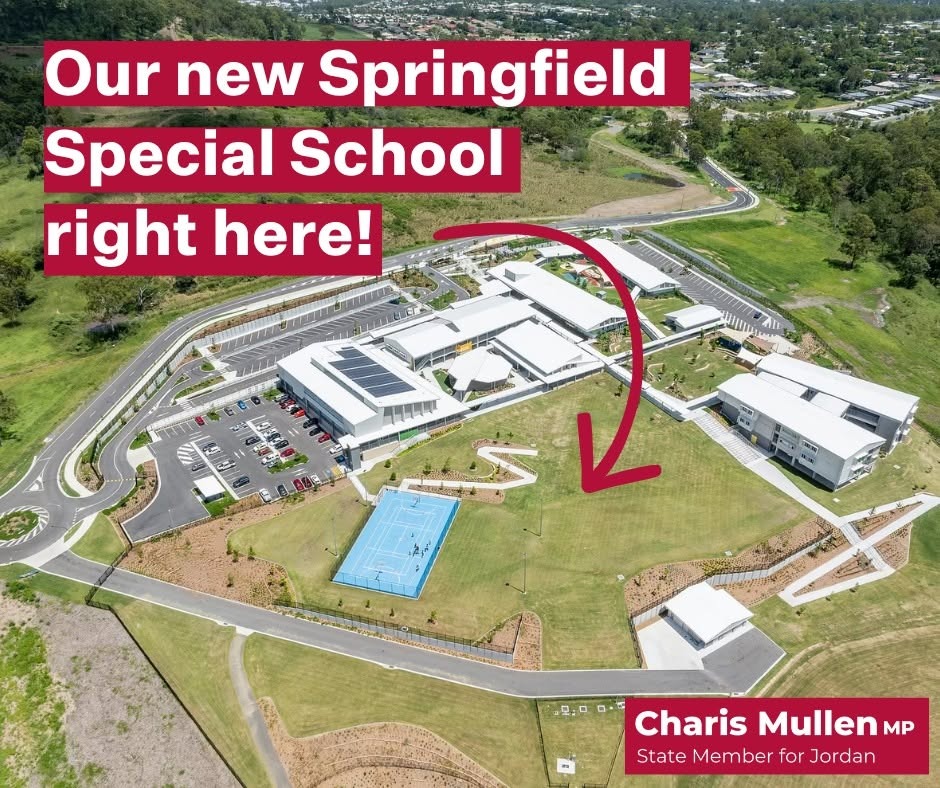
A new special school for the Springfield–Redbank corridor is now tracking toward a staged opening, with the first intake expected in 2027 and full delivery by early 2028.


The facility, planned for co-location with Woogaroo Creek State School in Augustine Heights, is being designed to respond to sustained enrolment growth across one of South East Queensland’s fastest-expanding regions.

Updated project details confirm a two-stage rollout, with stage one scheduled to open in 2027, followed by stage two in Term 1, 2028.

Meeting Demand in a Growth Corridor

The school is intended to expand access to specialised education while easing pressure on existing facilities across Springfield, Redbank and surrounding suburbs.

Demand for special education placements has been rising alongside population growth in the corridor, with families often travelling significant distances to access appropriate support. The new site is expected to provide localised capacity and reduce strain on nearby schools already operating at or near enrolment limits.

The project remains in the planning phase, but has progressed to the point where a design contract has been awarded. Detailed design work is now underway, including assessments of traffic, vegetation, stormwater and acoustic impacts tied to the new campus.

Preparing for Construction

With planning advancing, the focus has shifted to refining the school’s design and preparing for construction.

Key next steps include finalising the campus layout and addressing site-specific considerations ahead of building works. A contractor has not yet been appointed, and the overall project budget remains subject to detailed design and procurement outcomes.

Community consultation on the project was carried out in the final quarter of 2025, helping inform early planning decisions.


A Coordinated Expansion of Special Education

The Augustine Heights project forms part of a broader pipeline of new special schools being considered or delivered across Queensland to keep pace with population growth.

Once complete, the co-located model with Woogaroo Creek State School is expected to support shared infrastructure efficiencies while delivering dedicated facilities tailored to students with diverse learning needs.

The staged 2027–2028 opening timeline now provides the clearest indication yet of when families in the Springfield–Redbank area can expect access to expanded local support.

Published 6-May-2026

New Ripley Police Station Opens as Ipswich District HQ, Strengthening Local Policing

A purpose-built police facility in Ripley has officially opened its doors, bringing a significant boost to frontline policing across the Ipswich region and reflecting growing demand for police services in a rapidly expanding area.


Read: Authorities Target E-Bike Rideouts in Springfield and Ripley


The $38 million Ripley Police Facility is a purpose-built three-storey complex that serves as both a local station and the new headquarters for Ipswich District Police, consolidating general duties alongside a suite of specialist units under one roof. These include the Criminal Investigation Branch (CIB), the Child Protection Investigation Unit (CPIU), and the Forensic Crash Unit (FCU), among others.

An official opening ceremony marked the occasion, with Acting Commissioner of Police Brett Pointing on hand to acknowledge the milestone for the community.

policing
Photo credit: QPS

“This new facility is more than a building — it’s a hub for community safety,” Acting Commissioner Pointing said.

“The brand-new facility aligns general duties, as well as specialist proactive and reactive units to coordinate and place QPS resources where they are most needed and can be most effective.”

The facility can accommodate more than 200 police officers and support staff, and has been designed with future growth in mind. That scalability matters in a region the QPS has flagged as having a rapidly growing population.

Construction wrapped up in early 2026, and the station’s coverage footprint is considerable. Officers based at Ripley now service communities stretching from Toogoolawah in the north to Boonah in the south, Goodna in the east, and through the Brisbane Valley as far west as Rosewood.

policing
Photo credit: QPS

Ipswich District Officer Acting Superintendent Ben MacKenzie said the building was designed with day-to-day policing operations firmly in mind. Key features include major incident rooms, dedicated Domestic and Family Violence (DFV) spaces, forensic science laboratories, and a vehicle examination bay.

“The addition of these general duties officers at the Ripley Station will strengthen our presence in the area and ensures the QPS can continue to meet the ever evolving and unique needs of this growing community,” Acting Superintendent MacKenzie said.

Thirty QPS officers now serve as part of the general duties complement at Ripley Station, bolstering the frontline capability of the new facility.

Acting Superintendent MacKenzie also pointed to the station’s central location as a genuine opportunity to build stronger ties between police and the people they serve.


Read: Scott’s Farm in Ripley: A Century-Old Legacy Hangs in the Balance Amidst School Development Plans


“The central location will provide a valuable opportunity to enhance our relationships with the community and foster greater public confidence in our efforts to keep the community safe,” he said.

For residents of Springfield Lakes, Ripley, and surrounding suburbs, the opening is a tangible sign that policing infrastructure is being scaled to meet the demands of a growing region. 

Published 6-May-2026

Springfield Commuters Hit Hard as Queensland Rail Cuts Nearly 300 Train Services

Queensland Rail has shifted the network to a modified Saturday-style timetable, axing 273 train services and cutting Springfield Line peak frequencies from every six minutes to every 15, with no confirmed end date in sight for commuters travelling between Springfield Central, Springfield, Richlands and Darra.


For Springfield Lakes, Springfield, Richlands and Darra commuters who depend on the Springfield Line to reach the city for work, the cut represents a significant daily disruption with no confirmed end date. Queensland Rail says the reduction is necessary because 42 three-car sets are currently offline awaiting maintenance, leaving 20 per cent of the train fleet unavailable.

“The simple fact of the matter is that we do not have enough trains to run our full timetable,” Queensland Rail head of corporate affairs Nev Conway said.

Behind the service cuts

The timetable cuts, which will take effect on Tuesday 5 May, stem from a maintenance backlog Queensland Rail attributes to rolling industrial action by the Electrical Trades Union (ETU), the Rail Tram and Bus Union (RTBU) and the Australian Manufacturing Workers Union (AMWU), involving 880 notices of industrial action lodged against the network. All three unions are in a wage dispute affecting maintenance workers across the Queensland Rail network.

Photo Credit: Google Maps

The unions dispute that characterisation. The ETU argues that Queensland Rail’s decision to withhold pay from employees for performing partial duties, communicated to workers on Friday morning, is the direct cause of the timetable collapse. The AMWU echoes that position, arguing the disruption stems from poor planning rather than strike action alone.

“The AMWU has made it clear for weeks that industrial action can be withdrawn if agreement is reached on just two key classification-based claims,” an AMWU spokesperson said. “Commuters are paying the price.”

Queensland Rail last week also cut train capacity from six-car to three-car sets before this week’s further reduction in services. The timetable will be cut again if the maintenance backlog continues to grow.

For Springfield Line commuters 

From Tuesday 5 May until further notice, Springfield Line services run every 15 minutes during morning and afternoon peak hours, and every 30 minutes off-peak. Trains will be more crowded due to the simultaneous reduction in service frequency and the use of three-car sets instead of six-car sets. Commuters should expect delays at platforms and allow additional travel time, particularly during peak windows.

Airtrain services remain unaffected by the timetable changes.

Queensland Rail has issued 471 return-to-work notices to its maintenance workforce, with 490 maintenance employees facing loss of pay if they continue to participate in strike action.

Planning your trip this week 

Commuters on the Springfield Line are strongly advised to check the TransLink journey planner before leaving home each day, as live updates to services will continue to be published there. Services may be reduced further if the backlog of maintenance work continues to grow.

The situation is being reviewed against a union response deadline of 7 May. Until an agreement is reached, the reduced timetable will remain in place.

For live service updates, click here or download the TransLink app. Replacement bus services are operating at some stations to manage overflow demand.


Published 4-May-2026