

Six Years to Brisbane 2032: Inside Ipswich’s $200m Infrastructure Vision

Ipswich has officially entered the final six-year stretch to the Brisbane 2032 Olympic and Paralympic Games, using the milestone to frame a pitch that extends far beyond medals and packed stands. Facing rapid population growth, civic and business leaders are positioning the global event as a fixed deadline around which infrastructure, investment and long-term development can be pursued.


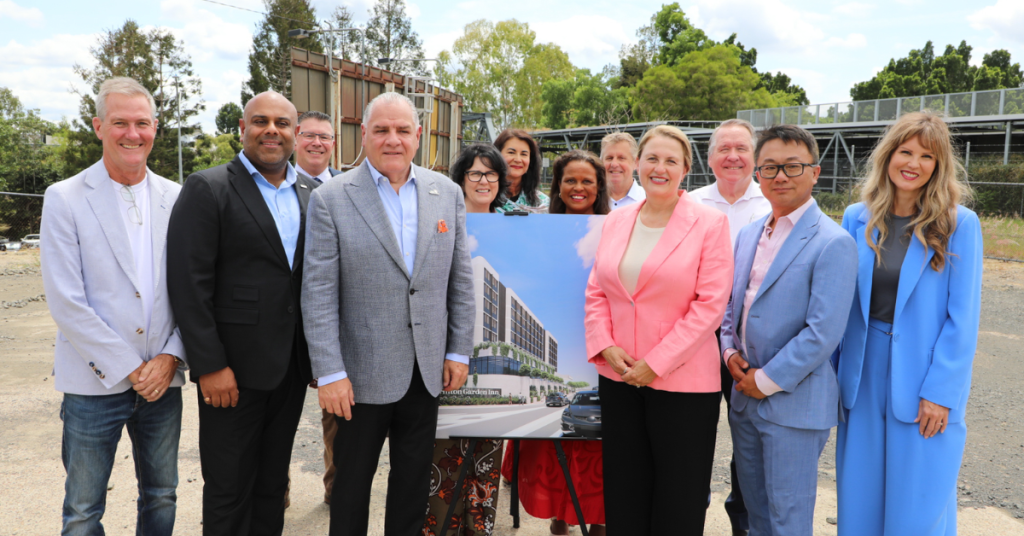
Mayor Teresa Harding reinforced those ambitions at a “Six Years to Go” gathering at Brighton Homes Arena. Council’s broader 2032 strategy uses the Games horizon to pursue transport, sporting, business and community projects intended to deliver benefits well beyond the event itself.

Stadium upgrades test legacy ambitions

At the heart of the city’s infrastructure push is the proposed $200 million North Ipswich Sport and Entertainment Precinct, which Council has described as a long-term vision for a major sporting and entertainment destination.

The project’s first substantial component is the $40 million Western Grandstand redevelopment, backed by a joint funding package comprising $20 million from the Australian Government and $10 million each from the Queensland Government and Ipswich City Council.

Construction is expected to begin in September 2026, weather and conditions permitting, with completion targeted for late 2027. The redevelopment is planned to deliver about 2,000 seats, team dressing rooms and upgraded player facilities, media and coaches’ boxes, improved public amenities and function space for up to 250 guests.

Beyond servicing local sport, council wants the broader precinct to strengthen Ipswich’s ability to attract major sporting events, concerts and festivals. Council is also separately promoting Ipswich’s sporting facilities to international teams seeking pre-Games training bases, with the aim of generating additional spending across accommodation, hospitality and local suppliers before competition begins.

Photo Credit: IpswichCC

Closing the accommodation deficit

Private-sector alignment with the city’s 2032 preparations is most evident in the CBD, where a major hotel development is being advanced to address a shortage of visitor accommodation.

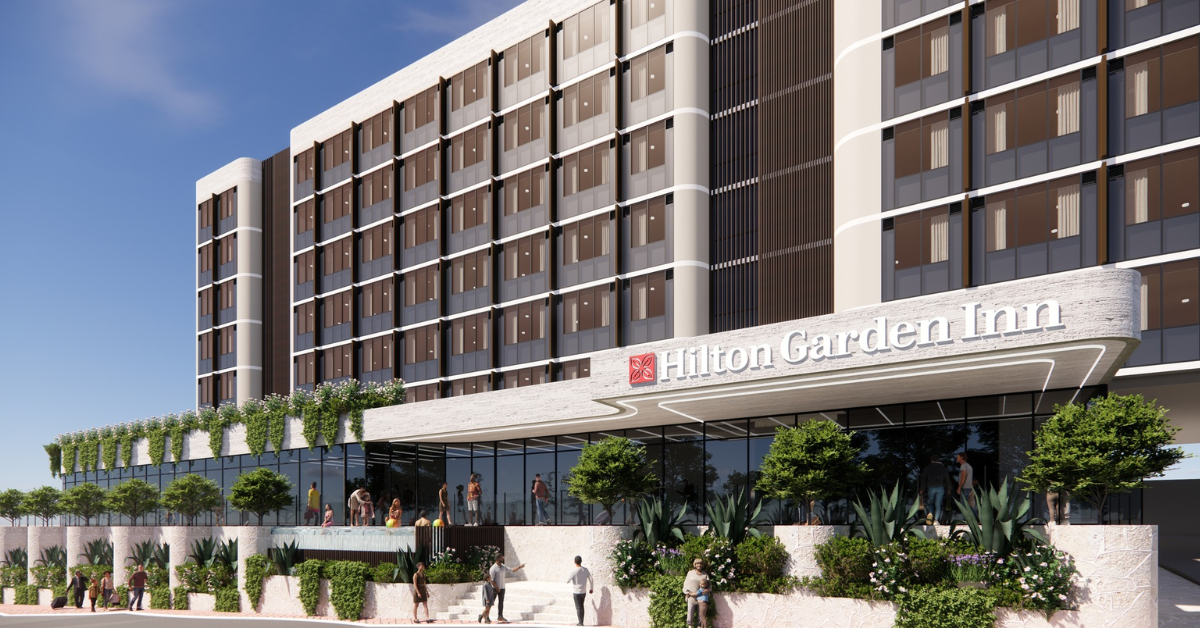
Ipswich City Council has signed a development agreement for Ipswich Hotel Group to deliver a $53 million, seven-storey Hilton Garden Inn on council-owned land in Ellenborough Street, after the developer reached an agreement with Hilton.

An accommodation audit cited by council identified 515 short-term rooms across Ipswich, around 310 fewer than the city estimates will be required to meet Games-related and longer-term demand. The proposed 160-room hotel would more than halve that identified shortfall if completed as planned.

Council says the project is expected to employ about 150 construction workers and create approximately 50 permanent jobs after opening. Construction is planned to begin in late 2026, with completion targeted for late 2028.

The 2032 pipeline reaches into heavy industry

The construction pipeline associated with Brisbane 2032 is also influencing industrial investment.

At Swanbank, Future Forgeworks has broken ground on a modern steel mill designed to process recycled scrap using electric-arc technology and produce about 350,000 tonnes of reinforcing steel annually.

The company has said it wants to position the mill to supply Queensland’s pre-2032 construction boom, including Olympic-related building activity. Future Forgeworks expects the project to support more than 400 jobs during construction and more than 200 ongoing jobs once operational.

The significance for Ipswich extends beyond the Games themselves. If delivered as planned, the project would add major manufacturing capacity to the city while linking local industry to a broader infrastructure pipeline expected to continue well beyond 2032.

Springfield investment extends beyond elite sport

At Springfield Central, where Brighton Homes Arena is already confirmed as a Brisbane 2032 venue, the Brisbane Lions are proposing a complementary $45 million community sports hub.

The club says the project would include a new AFL-sized community oval, a two-lane running track, sports lighting, inclusive change facilities, a community pavilion and multi-purpose courts suitable for sports including wheelchair AFL, basketball and padel.

The Lions say funding support has been confirmed from the club and Ipswich City Council, while discussions continue with the Australian and Queensland governments. The development application remains before council, meaning the project still has planning and funding steps to clear before construction can proceed.

The proposal reflects the broader legacy argument being made across Ipswich: that investment momentum surrounding the Games should also produce facilities capable of serving local clubs, families and a growing suburban population long after the Olympic and Paralympic flame has been extinguished.

Six years to turn plans into lasting gains

The six-year countdown now gives Ipswich a clear measure against which its legacy ambitions will be judged.


Brighton Homes Arena’s Games role is established, funding for the Western Grandstand is in place, and major private projects including the Hilton Garden Inn and Swanbank steel mill are moving through development and construction. Other proposals, including the Brisbane Lions Community Hub and later stages of the North Ipswich precinct, still depend on further approvals, funding or government support.

Published 19-Aug-2026
Ipswich to Welcome Multi-Million Dollar Hilton Hotel Development

A $53-million Hilton Garden Inn that project proponents expect will outclass Noosa in terms of visitor infrastructure and capacity will soon rise in Ipswich.


The project is scheduled to begin construction in late 2026 and reach completion by the end of 2028. This seven-storey development will occupy council-owned land on Ellenborough Street, positioned directly next to the recently improved Nicholas Street Precinct. Local officials noted that the city already draws more day-trip visitors than the Sunshine Coast’s Noosa, making a high-end stay option a logical next step for the region. 

As the local population is expected to nearly double to half a million people by 2044, the addition of one hundred and sixty rooms will help manage the increasing number of people moving through the area.

Boosting the Local Economy and Jobs

The project is expected to create fifty permanent jobs for the community once the hotel is finished. This new business is projected to add nearly three million dollars to the local economy every single year. Beyond providing rooms, the building will include a restaurant, a bar, a fitness centre, and a shop. 

These facilities are designed to support regional tourism, serving both local and international visitors who want a high-quality place to gather. The city recently spent over three hundred million dollars on the Nicholas Street Precinct to make the area more attractive to outside investors. This hotel is seen as a major result of that long-term investment in the heart of the city.

Preparing for the 2032 Games

Local representatives believe the hotel will be a prime location for international sports teams during the lead-up to the Brisbane 2032 Games. Because the site is about a thirty-five-minute drive from the main bustle of Brisbane, it offers a level of privacy and security that teams often look for when they are training. 

It allows athletes to get used to the Queensland climate without the distractions of a major capital city. There is currently a significant shortage of short-term accommodation in the area, and this project aims to fill that gap well before the world’s eyes turn to Queensland for the Olympics.


A Growing Industrial and Tourism Hub

Ipswich is currently home to major global names like Boeing and L’Oreal, along with the largest meat processing plant in the southern hemisphere. The city holds more industrial land ready for development than all other councils in Southeast Queensland combined. This makes it a busy destination for business travellers from places like Singapore and Korea who may be visiting for work or to see family. 

The Hilton Garden Inn will operate under a fifty-year lease on the council land, with options to stay for another fifty years after that. This long-term commitment suggests that the city is being viewed as a stable and growing part of the state’s future.

Published Date 14-February-2026

Why the Ipswich–Springfield Public Transport Corridor Matters Now

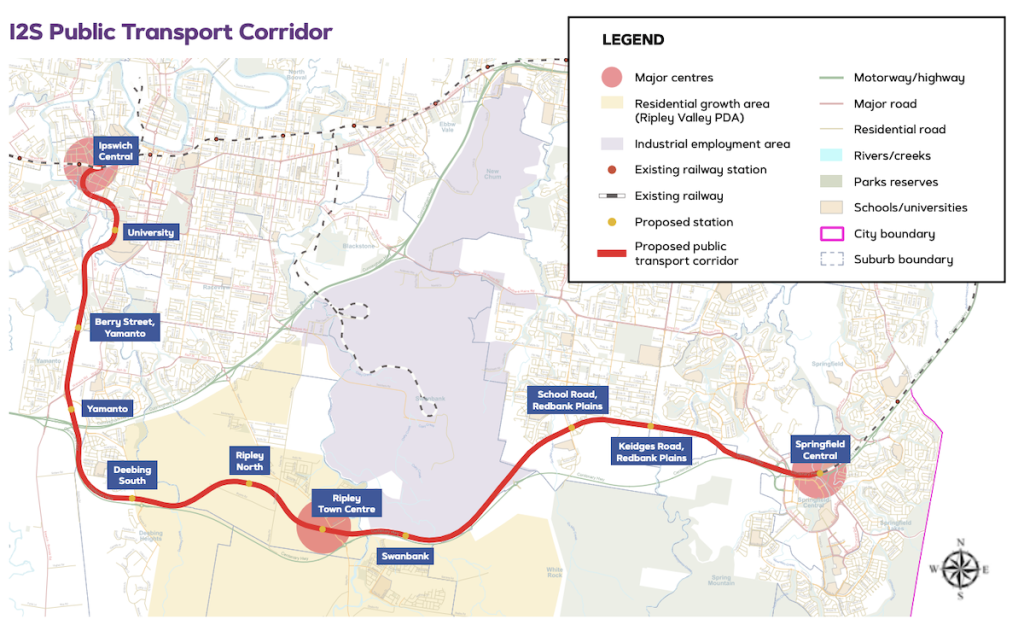
Springfield Central is set to anchor a proposed 25-kilometre public transport corridor, which could reshape how residents travel across Ipswich. Linking Ipswich to Springfield Central through fast-growing suburbs like Ripley and Redbank Plains, the Ipswich to Springfield Central Public Transport Corridor is designed to deliver more than just shorter trips. It aims to transform how communities connect to jobs, education, and essential services.


Building for a Growing Population

Ipswich is one of Australia’s fastest-growing cities, with the population expected to more than double in the coming decades. Suburbs along the proposed route, including Ripley Valley, one of the nation’s largest master-planned communities, are already experiencing rapid expansion.

As more homes rise and new families settle in, the need for accessible, reliable transport becomes increasingly urgent.

Local planners say the I2S corridor is designed to meet that challenge. Spanning roughly 25 kilometres and featuring up to nine potential stations, the corridor would link Springfield Central to Ipswich Central, connecting major residential areas with employment, education, and recreational hubs.

Ipswich to Springfield Central Public Transport Corridor
Photo Credit: IpswichQLDGov

It is intended to serve more than 200,000 residents and integrate with broader transport networks, including existing train services and the Cross River Rail project in Brisbane.

The Consequences of Waiting

Without major investment in public transport, Ipswich faces a future of gridlock. Council analysis shows that by 2031, the city’s road network could fail to cope with traffic demand, causing significant delays for commuters and reducing productivity. Travelling from Ripley to Brisbane by car is projected to take longer and become more costly as congestion worsens.

The I2S corridor is seen as a solution to this looming challenge. A dedicated public transport link will reduce pressure on roads, cut travel times, and offer a viable alternative to car travel.

The corridor is also expected to encourage transit-oriented development. This planning involves building homes, shops, and services around transport hubs, creating vibrant, walkable communities.

A Community-Focused Approach

Improved connectivity means easier access to education for young people, better links to healthcare, and more options for employment. For those without cars, reliable public transport can be a lifeline, reducing isolation and opening up opportunities.

Council documents highlight the social benefits of the corridor, noting that it will help bridge the gap between new and established communities.

As Ipswich continues to expand, the corridor could play a crucial role in uniting suburbs and strengthening community ties. Local businesses could benefit from improved access for workers and customers, supporting the local economy as the region grows.

Planning the Path Ahead

Progress on the project has already begun. A strategic assessment and initial business case were completed in 2020, and the project is now listed as an early-stage proposal on Infrastructure Australia’s Infrastructure Priority List. Funding commitments have been secured for further planning, with an options analysis completed in late 2024.

The next step is the preparation of a detailed business case, which will refine the preferred alignment, costs, and delivery schedule. While the total cost is estimated at between $2 billion and $3 billion, advocates argue that the long-term economic and social benefits far outweigh the price tag.

Once complete, the corridor would form part of a wider strategy to create a sustainable, efficient transport network for South East Queensland.


Published 15-Oct-2025