


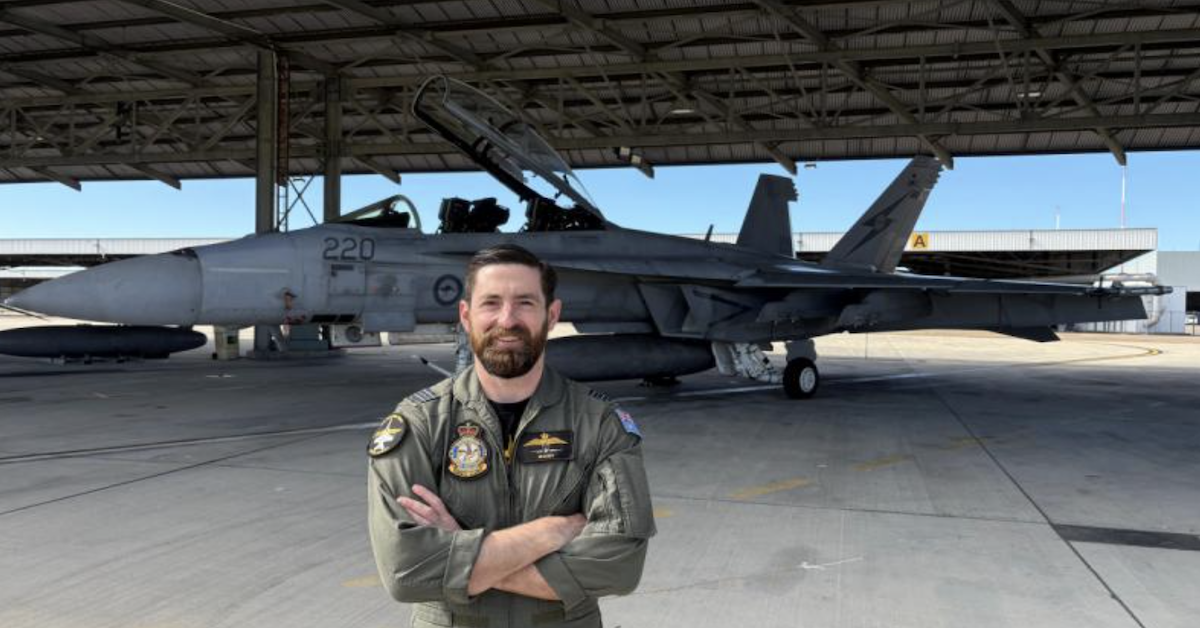
From the flight line at RAAF Base Amberley on the outskirts of Ipswich, the Queensland sky has long been a place of noise, speed and possibility. For Squadron Leader Scott Wood, it is also where a childhood fascination finally caught up with him.
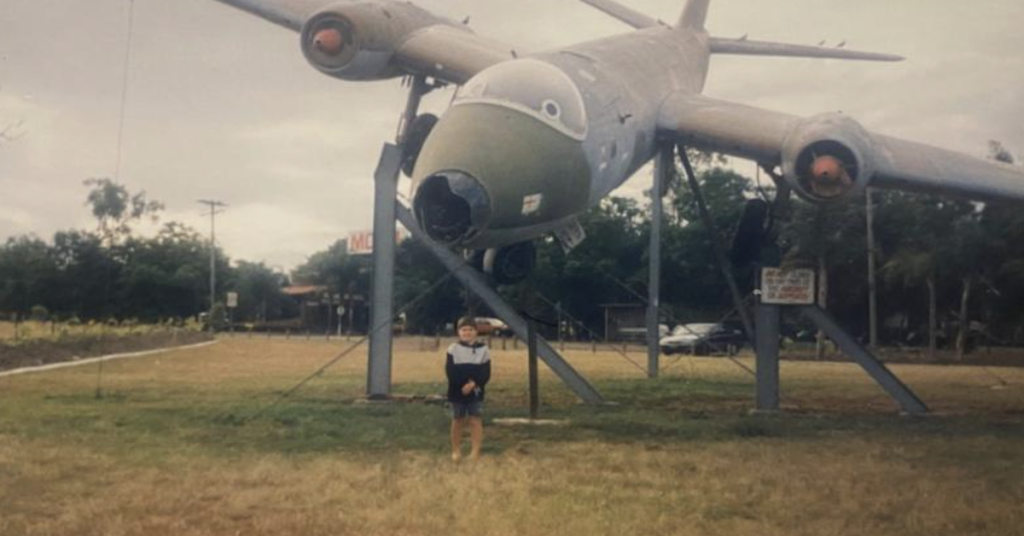
Long before he wore a flying suit or climbed into the cockpit of a F/A-18F Super Hornet, Wood was just a Brisbane kid looking up. He remembers being about 10 years old when fast jets overhead—especially the thunder of F-111s—captured his attention. At the time, it was only curiosity. Flying felt distant, almost abstract. He had never even been in an aircraft cockpit and admits he wasn’t sure he would like it, let alone build a career around it.
That uncertainty followed him into training. Wood still recalls his first solo flight in a CT-4 trainer, when the aircraft felt enormous and the responsibility suddenly very real. Alone in the sky, he looked out across the wings and realised he was truly in control. It was exhilarating—and confirming.

Years later, that feeling returned with greater force. His first solo in a Super Hornet was, in his words, “next level”. The scale was different, the power unmistakable, but the sense of awe was the same. Even now, he says, flying solo hasn’t lost its impact.
That mix of wonder and discipline eventually led Wood to one of the Air Force’s most visible roles: display pilot. When the opportunity came, he didn’t hesitate. It felt like a conversation across time—the 10-year-old who once watched jets overhead finally answering back. Every display since, he says, has carried that same joy.
The role took on extra meaning when Wood flew in front of Queensland crowds, particularly at Pacific Airshow Gold Coast. Flying along the coastline at Surfers Paradise, skyscrapers rising behind the aircraft and thousands of spectators lining the beach below, he found himself with a view the crowd never sees—the full scale of the moment, and the people it reaches. After landing, walking through the crowd and hearing reactions from strangers brought home just how powerful those few minutes in the sky could be.
For one spectator, the experience was deeply personal. Volunteering at Pacific Airshow Gold Coast, Kellie Wood stood among the crowd watching the Super Hornet split the sky—knowing her son was at the controls. Pride mixed with nerves as she watched him climb until he disappeared from view, then return in a display that included fast, low passes, flares and manoeuvres pulling up to 7Gs, at speeds of up to 1100 kilometres per hour and down to 50 metres over water.


“That’s my Top Gun son,” she thought, as the crowd fell silent and then erupted.
For Wood, now with 1 Squadron at Amberley, the spectacle has never been just about performance. He often says the most important people in the audience are the ones looking up and wondering if they could ever do the same. He knows that feeling well. He was once that kid—never imagining he’d one day be flying displays over his home state, let alone from a base just outside Ipswich.
That sense of connection is why he believes aerobatic and handling displays matter. Visibility matters. Seeing Air Force aircraft in the sky matters. Many pilots, he says, trace their career choice back to a single moment—an airshow, a formation overhead, a jet tearing across the beach.
Soon, Wood will hand over the display role to the incoming 2026 Super Hornet display pilot, passing the baton to the next aviator who will carry that responsibility. Until then, every crowd is a reminder of why he flies.
At the end of the day, he says, it’s some of the best flying you can do. And if even one young person walks away dreaming a little bigger, then every second in the sky is worth it.
Published 31-Dec-2025