

Springfield Lakes Residents Asked: Is Your Suburb Actually Built for Walking?

Springfield Lakes has been described as a planned active living community, but a new university research project is putting that promise to the test, and local residents hold the key to the answers.


Read: An Updated Guide to the Best Ipswich Walks


The University of Southern Queensland (UniSQ) has launched an online survey asking Springfield Lakes and Spring Mountain residents whether their neighbourhoods actually make it easy to walk, ride, and get around without reaching for the car keys.

The survey is part of the Active Springfield Neighbourhoods Project, a study led by UniSQ researcher Melinda Covey-Hansen, who is undertaking the work through a PhD internship hosted by Queensland Health. The project is supported by Ipswich City, the Office of the Queensland Government Architect and the Heart Foundation.

UniSQ researcher Melinda Covey-Hansen (Photo credit: unisq.edu.au)

Ms Covey-Hansen says the research is grounded in well-established evidence that where people live directly shapes how active they are. Neighbourhoods with good access to walking and cycling paths, parks, schools, shops, public transport, shade and lighting tend to make it much easier for residents to weave physical activity into their everyday routines, she says.

The goal is to find out whether what planners designed is what residents are actually experiencing on the ground. Ms Covey-Hansen says the project will combine resident feedback with mapping and planning data to build a clear picture of whether Springfield’s active living design principles are being delivered as intended and felt that way by the people living there.

Whether that vision has translated into the kinds of connected, walkable streets and accessible parks residents were promised is precisely what this research aims to find out.

Findings from the project will be used to produce a Healthy Places, Healthy People case study through Queensland Health, with the aim of sharing lessons and informing planning, design and advocacy for more walkable communities across Queensland. Resident feedback, including suggestions for improvement, will also be passed on directly to Ipswich City Council to help shape future infrastructure priorities.

Photo credit: Pexels/ Daniel Reche

Ipswich Mayor Teresa Harding says the council welcomes the research, pointing to the recently adopted Ipswich City Plan 2025 as a sign of the city’s commitment to well-planned, connected neighbourhoods supported by transport, services and local centres. Harding says the council’s city design and planning teams will be watching the findings closely, as real-world resident experiences can help inform how the city continues to deliver quality neighbourhoods for a growing population.

For locals, taking part is straightforward. The online survey takes only a short time to complete and asks residents about their physical activity habits, along with what helps or gets in the way of active living where they live. Residents aged 18 and over from Springfield Lakes and Spring Mountain are encouraged to participate before the survey closes on 10 April 2026.

As an added incentive, participants can opt into a prize draw to win a 200 dollar Healthy and Active pack, which includes a Fitbit and UniSQ merchandise.


Read: Radio Host Matty Acton Walks from Bowen Hills to Ipswich, Raises $50k


If you would like to have your say on what active living looks like in your neighbourhood, this is your chance to make it count. Researchers want to hear from you. The survey is available online through the UniSQ website. Residents can also contact Ms Covey-Hansen directly for more information via the UniSQ project page.

Published 30-March-2026

Springfield Lakes Community Rallies Around Football Icon Jonathan Brown After Successful Surgery

The Springfield Lakes community is celebrating the news that Brisbane Lions legend and local favourite Jonathan Brown is recovering well following a delicate operation to remove a brain tumour.


Unexpected Discovery and Medical Procedure

The health scare began when a routine medical check-up led to the discovery of a shadow on the former captain’s brain. Medical professionals identified the growth as a low-grade tumour, which required prompt surgical intervention to ensure his long-term wellbeing. 

Brown entered the hospital for the procedure mid-week and has since confirmed that the operation went according to plan. The triple premiership player is now focusing on his rehabilitation alongside his family, including his wife Kylie.

A Positive Path to Recovery

While a medical event of this gravity is often met with concern, the outlook for the popular sports commentator is bright. Shortly after the surgery, Brown was reportedly in high spirits and already showing signs of his trademark energy while leaving the hospital. 

He has expressed his gratitude for the successful outcome and noted that he intends to discuss the details of his health journey with the public once he has had sufficient time to rest. For now, his priority remains his physical health and spending quiet time at home with his loved ones.

Reflecting on a Decorated Career

The news has prompted many fans to look back on Brown’s significant contributions to the sport. Over a fourteen-year career, he became one of the most respected figures in the game, known for his physical style of play and leadership. He played over 250 games and was a key part of the dominant Brisbane side that won three consecutive flags in the early 2000s. 

His decision to retire over a decade ago was largely influenced by the need to protect his brain health following several serious on-field injuries, a choice that remains relevant as he navigates this current health challenge.


Widespread Support from the Football Family

The broader sporting community has moved quickly to offer encouragement to the forty-four-year-old. Fellow commentators and former teammates have shared messages of strength, highlighting Brown’s reputation as one of the most liked and toughest individuals in the industry. 

Friends who have spoken with him recently noted that he is already back to his usual self, jokingly annoying his wife and showing the same resilience that defined his time on the footy field. The general consensus among his peers is a wish for a speedy recovery and a quick return to his media duties.

Published Date 30-March-2026

The Giant-Slayer in the Rain: Why Lachlan Kennedy is the No. 1 Australia Refuses to See

Gout Gout lost. All it took was 20.38 seconds.

For eighteen months, Australian athletics has revolved around Gout Gout — the teenage sensation driving headlines and expectation. But as the athletes walked out for the 200m at the 2026 Maurie Plant Meet, the narrative shifted with the weather.

In the rain at Lakeside Stadium, UQ 2025 Sportsman of the Year Lachlan Kennedy did it again — beating Gout Gout in the men’s 200 metres at the 2026 Maurie Plant Meet. Not on projection. On the track.

For a sport that has spent 18 months focused on one name, this result cuts through. Once might be an upset. Twice demands attention.

Here’s what actually decided it.

The Cinematic Clash in the Rain

After three hours of dry conditions, rain hit just as the field stepped onto the track — a moment Lachlan Kennedy later described as “cinematic”. It set the stage for a clear matchup: the 18-year-old national record holder against the 22-year-old Engineering and Commerce student at the University of Queensland who has built his career on stepping out of the shadows.

For Kennedy, it carried weight. A back injury ruled him out of the 2025 World Championships, and a false start ended his 200m national final last year. This wasn’t just another race — it was a chance to reset where he stands.

the rain-slicked showdown

The “Extra Man” in the Stands

The atmosphere at Lakeside Stadium was nothing short of extraordinary. A sell-out crowd of nearly 10,000 fans—many of whom braved the “sodden” conditions just to glimpse the Gout Gout phenomenon—created a pressurised cauldron of noise.

Kennedy, however, chose to absorb that pressure rather than be crushed by it. He viewed the massive turnout not as a distraction, but as a performance-enhancing “x-factor.” He characterised the energy of the crowd as an “extra man” on the track, fueling his drive to upstage the favorite.

“It’s unreal. The bar just gets raised for everyone else. You wouldn’t have all these people out here running if it was just one of us being super good… it’s so good for the sport and the spectators.”

Lachlan Kennedy

The Giant-Slayer: Kennedy Eclipsing Asafa Powell

Before the 200m showdown, Kennedy had already laid down a definitive marker. In the 100m earlier that evening—his first appearance over the distance this season—he delivered a performance of clinical power.

He stopped the clock at 10.03 seconds, a time that instantly recalibrated the expectations for Australian sprinting on home soil.

The victory was a historic scalp. By 0.01 seconds, Kennedy eclipsed the 18-year-old meet record held by the legendary Asafa Powell, whose 10.04 mark had stood since 2008.

It was a sophisticated statement of intent; while the public eye remained fixed on Gout’s potential, Kennedy was producing one of the fastest times ever recorded by an Australian in the present.

The Mental Game: “Not Panicking” Against the Slingshot

The technical mastery of Kennedy’s 200m victory can be traced back to the weight room. His explosive start is the product of a brutal training regime; observers note him “lifting something ridiculous in the gym, akin to a small bear, in weird leg weights.”

That strength translated into a two-meter lead off the bend, leaving Gout Gout—a notorious “fast-finisher”—with a massive deficit to erase.

Psychologically, Kennedy played a perfect hand. He understood the “familiar script” of the race: he would fly early, and Gout would attempt to slingshot off the curve in the final 50 meters.

The challenge was maintaining composure while hearing the inevitable footsteps of a closing rival. Kennedy’s victory was defined by his refusal to “freak out” when the gap began to shrink in the dying moments.

“It was just grit—another hard, gritty run—and I was able to get it done. The thing is you know Gout is going to come. It’s about not panicking, he will make up ground, but it’s knowing in your head that he is going to come and not freak out and stay relaxed.”

Lachlan Kennedy

Golden Toast: The Commercial Rise of Gout Gout

Even in defeat, Gout Gout remains a commercial juggernaut. Earlier in the meet, the teenager leaned into his status as a cultural icon, unveiling a “bizarre” piece of jewelry that signaled his arrival as a marketing force: a gold chain featuring a pendant of a partly eaten piece of Vegemite toast.

The bling was a direct nod to a high-profile sponsorship deal signed in early 2026, marking Gout’s transition from a mere prospect to the face of Australian athletics. There was a palpable irony in seeing the flamboyant accessory gleaming just moments before a “rocky” race on a rain-slicked track. It served as a reminder that Gout’s brand remains largely untouchable, even when his results face a stern reality check.

The Slippery Slope of 0.05 Seconds

The margin was 0.05 seconds — 20.38 to 20.43.

The environmental conditions of the 200m final turned the race into a battle of attrition. Between the heavy rain and a -0.7 headwind, the track became a liability. Gout suffered a critical slip at the start, a mishap that proved fatal in a race decided by fractions.

In those conditions, execution outweighed raw speed.

Gout’s slightly compromised start on the wet track mattered. From there, he was chasing.

Kennedy controlled the first half and created enough buffer to absorb the late surge.

The final scoreboard read 20.38 for Kennedy and 20.43 for Gout. While the 0.05-second margin was razor-thin, the technical “Paradox of Hierarchy” is more pronounced: Gout’s national record (20.02) remains a staggering 0.36 seconds faster than Kennedy’s winning time.

Gout, ever the professional, congratulated his Queensland teammate while acknowledging the “rocky” start that hampered his charge.

“Today, he had the ‘W’ but next time I’ll be better, for sure. He’s a Queensland guy and a good friend of mine, so congratulations to him. But I’ll be back, for sure.”

Gout Gout

A New Hierarchy in Australian Sprinting?

The 2026 Maurie Plant Meet has established a fascinating tension ahead of the National Championships in Sydney this April.

On paper, Gout Gout is the fastest man in history.

In practice, Lachlan Kennedy has now beaten him head-to-head for two consecutive years.

That doesn’t settle the rivalry. The next race in Sydney will matter more.

But it does clarify the present.

Right now, Kennedy isn’t chasing the conversation. He’s leading it.

It is the classic struggle between the record-breaker and the winner.

Published 29-March-2026

Lions Hit Early, Sharks Hit Harder: Third-Quarter Blitz Sinks Brisbane

Brisbane didn’t just lose control of this game. They lost it in a 20-minute storm they couldn’t steady. They had it on their terms. Then they lost it in a burst they couldn’t stop.

The Brisbane Lion’s VFL side controlled the early shape of their Round 2 clash at Brighton Homes Arena, but when the Southport Sharks lifted, the response just wasn’t there.

A 10-goal third quarter turned a tight contest into a chase, with the Sharks running out 19.8 (122) to 15.11 (101) winners in the Lions’ opening home-and-away match of the 2026 Smithy’s VFL Premiership season.

Final Score

Brisbane 15.11 (101)
Southport 19.8 (122)

Fast Start, Real Intent

The Lions looked sharp early. Not perfect, but purposeful.

Five first-quarter goals set the platform, with Dylan Smith announcing himself immediately on debut with two majors. Sam Marshall, Jake Fazldeen and Curtis McCarthy added to the pressure, and Brisbane carried a 10-point lead into the first break.

The ball movement had intent. The forward entries weren’t always clean, but they were repeatable. For a quarter, Brisbane dictated terms.

Arm Wrestle Turns

The second term tightened.

Southport adjusted around the contest and started to control territory, forcing Brisbane into a more reactive game. The Lions managed just two goals for the quarter through Charlie Hewitt and Cody Curtain, and what had been early control slipped into a grind.

By half-time, the Sharks had edged in front by two points. Not decisive, but telling.

Marshall kept working through traffic and pressure, finishing with 26 disposals, eight marks and two goals in a performance that held Brisbane in the fight when the game narrowed.

The Quarter That Broke It

Then came the third.

Brisbane briefly reclaimed the lead through Reece Torrent just after the main break, but that was the last time they were in front. What followed was a surge that decided the match.

Southport slammed on 10 of the next 11 goals, owning clearance, territory and scoreboard pressure all at once. The Lions’ structure held in patches, but the volume of entries and repeat contests eventually broke through.

By three-quarter time, the margin had blown out to 43 points. Game, effectively, gone.

Late Push, Too Late

To their credit, Brisbane didn’t fold.

Three quick goals to Tahj Abberley, Curtis McCarthy and Fergus McFadyen gave the Lions a pulse. Marshall added another, and Shadeau Brain’s late goal kept the margin within reach long enough to ask a question.

But Southport had already done enough. One steadying goal in the final term shut the door on any genuine comeback.

2026 VFL Brisbane Lions vs Southport Sharks Match highlights

The Positives That Matter

There was enough here to suggest Brisbane won’t be far off.

McCarthy’s three goals gave a consistent forward target. Brain provided drive from the back half with 16 disposals and five marks, while Charlie Offermans and Torrent worked hard through the middle all day.

Tom Doedee’s return added composure behind the ball, and Koby Evans showed glimpses in his first outing in Lions colours.

The issue wasn’t effort. It was absorption. When Southport lifted, Brisbane couldn’t slow the game enough to reset.

Momentum Swings

Round 2 doesn’t define a season, but it exposes where you’re vulnerable.

At this level, momentum isn’t gradual. It’s violent. And once it turns, you either slow it or you get buried by it.

Brisbane couldn’t find that circuit breaker in the third quarter. That’s the immediate fix.

They now turn to a Good Friday clash against Sandringham. The response will matter more than the result.

Goals

McCarthy 3, Smith 2, Marshall 2, Torrent, McFadyen, Hewitt, Fazldeen, Evans, Curtain, Brain, Abberley

Best

Offermans, Brain, McCarthy, Lloyd, Torrent, Marshall

Published 29-March-2026

St Augustine’s College in Augustine Heights Leads Regional Shift Toward Global Learning

St Augustine’s College in Augustine Heights has officially become the most linguistically diverse campus within the Brisbane Catholic Education system, with students now speaking 56 different languages in their homes.


The college achieved this milestone as the broader Brisbane Catholic Education (BCE) network reached a record scale of 80,000 students across 139 countries of birth. This growth has prompted a physical transformation of the Augustine Heights campus, including the recent addition of a sixth stream of secondary classes and the construction of the expanded Giramee Hall. 

These infrastructure projects are designed to support a student body that includes children born in nations as varied as Albania, Cambodia, Brazil, and Afghanistan. Local families at the college now share a community where Tagalog, Punjabi, Portuguese, and Aboriginal languages are heard alongside English in daily school life.

Academic Success Through Cultural Variety

St Augustine’s College
Photo Credit: Supplied

While St Augustine’s leads in language numbers, other nearby campuses are proving that this variety leads to higher academic results. St Thomas More College in Sunnybank, which ranks as the third most diverse school in the system, was recently named by the Australian Curriculum, Assessment and Reporting Authority as a school making a significant difference. 

Principal Les Conroy noted that the NAPLAN results at his school show that having students from 25 different countries is a primary driver of learning growth. He stated that the different perspectives and rich cultural backgrounds students bring into the classroom actually strengthen the overall educational environment rather than complicating it.

Practical Support for New Arrivals

The commitment to a global community extends beyond the classroom and into the school workforce through the Work and Welcome program. At Clairvaux MacKillop College, this initiative provides real-world employment to refugees and migrants to help them establish careers in Australia. 

One recent participant, a refugee from the Republic of Burundi named Douce, used her time working in the college canteen to build professional hospitality skills. The program operates across 146 schools and multiple offices in South East Queensland, aiming to turn the challenges of migration into long-term career stability for new residents.

Strengthening First Nations Leadership

St Augustine’s College
Photo Credit: Supplied

Parallel to these international connections, BCE is increasing its focus on First Nations identity through the Molum Sabe impact domain for 2026-2027. This month, more than 200 Aboriginal and Torres Strait Islander students are gathering for dance workshops across the Sunshine Coast and Fraser Coast. 

These sessions, led by cultural engagement officers like Gracey McGrath, provide a safe space for young people to connect with their heritage through song and storytelling. Senior Manager Mayrah Driese explained that these immersions are a priority for the organisation because they help build leadership skills among Indigenous youth.


Professional Growth for Educators

To ensure school staff can properly support such a varied population, new Cultural Awareness Days have been launched for 2026 at the Ngutana-Lui Cultural Studies Centre. Teachers and administrative staff participate in sessions that explore the BCE Cultural Capability Framework and First Nations spirituality. 

These training days include practical activities like weaving and yarning circles to help staff understand how intergenerational history affects modern learning. By deepening their awareness of First Nations knowledge, educators are better equipped to meet the needs of the diverse student groups found in growing suburbs like Augustine Heights.

Published Date 27-March-2026

Ipswich Steel Mill Breaks Ground, Promising Jobs and Cheaper Construction Materials for Queensland

Construction has officially begun on one of Australia’s first new steel mills in more than 30 years, with the Swanbank Green Steel Mill in Ipswich representing a significant development for Queensland’s construction and manufacturing sectors.


Read: Swanbank Energy Precinct Activates One of Queensland’s Largest Batteries


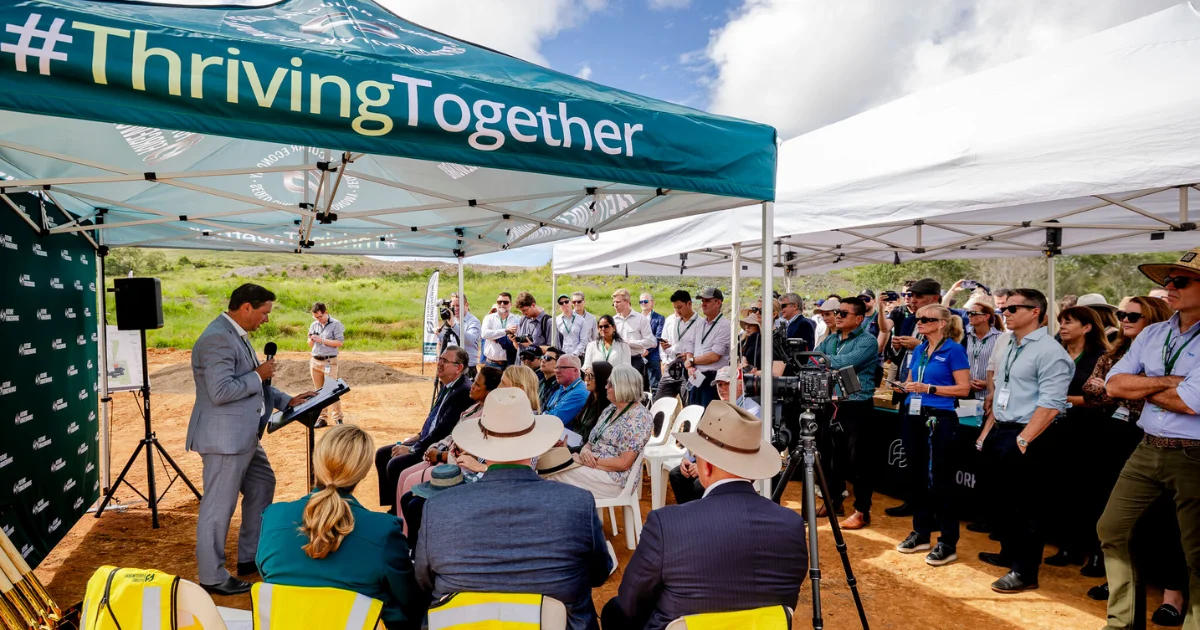
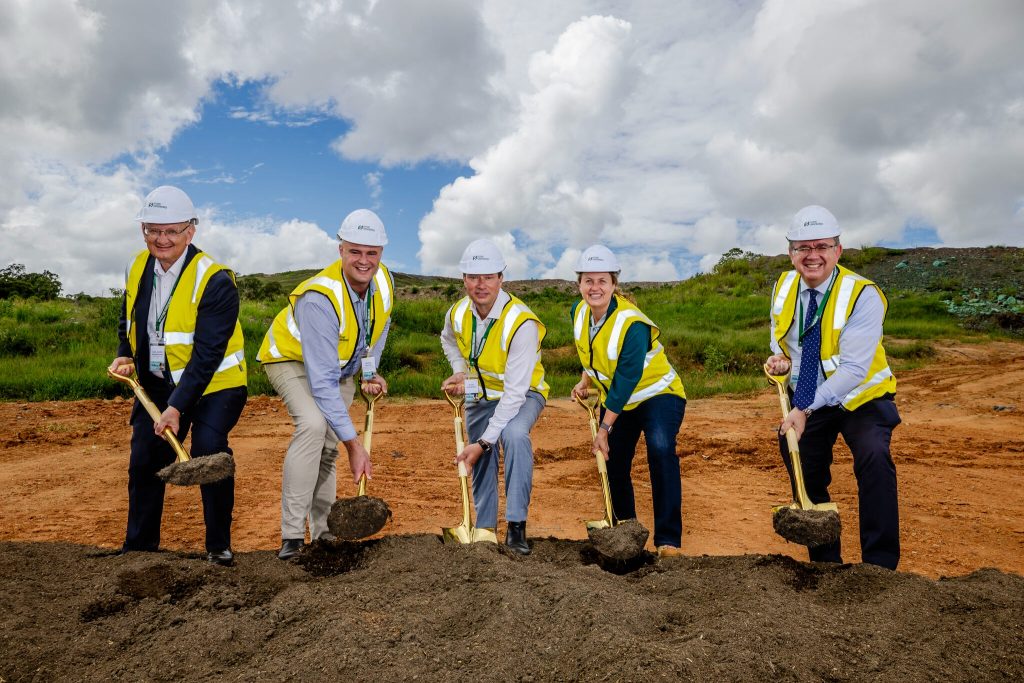
Developer Future Forgeworks held a soil-turning ceremony to mark the start of works on the Swanbank site, a fitting location with more than a century of industrial history behind it, and the milestone has been welcomed by local leaders.

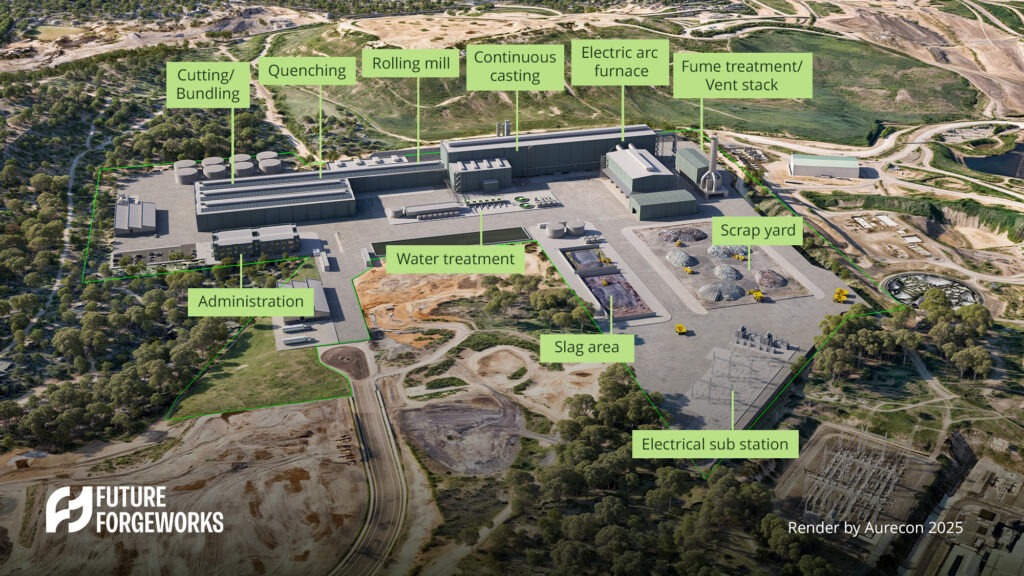
The mill is designed to produce up to 350,000 tonnes of steel reinforcing bar, or rebar, per year, made from recycled scrap metal. Rebar is used to reinforce concrete in skyscrapers, bridges and major infrastructure projects.

Render of the Swanbank Green Steel Mill (Photo credit: futureforgeworks.com.au)

Chief executive Rohan Richardson said the company’s ambition was to fully supply the Olympic build. With Brisbane set to host the 2032 Games, Mr Richardson said the company was hoping to capitalise on the imminent construction boom ahead of the Olympics.

Mr Richardson wants the mill operational within just over two years, ahead of the 2032 Brisbane Olympics. Beyond the Games, he said the mill could meet up to 90 per cent of Queensland’s rebar demand, dramatically reducing the state’s reliance on imported steel. He added that the goal was to provide the lowest operating cost in Australia, which he hoped would ease pressure on housing prices and industrial construction more broadly.

Cleaner steel, local jobs

Steel Mill
Photo credit: LinkedIn/Future Forgeworks

What sets Swanbank apart from traditional steelmaking isn’t just its location — it’s the technology. The mill will use an electric arc furnace, a system designed by German metals engineering firm SMS Group, which melts down scrap metal rather than processing raw ore with fossil-fuel-powered blast furnaces.

Future Forgeworks claims the production process could reduce carbon emissions by more than 70 per cent compared to conventional steelmaking. A separate estimate, citing a 30 per cent emissions reduction figure, put the environmental benefit at roughly the equivalent of removing around 160,000 vehicles from Queensland roads.

Steel Mill
Photo credit: LinkedIn/Future Forgeworks

Mr Richardson noted that advances in technology over the past decade had significantly changed the production process, with much of the gas previously used in steelmaking now replaced by electricity. The mill is not expected to reach net-zero until 2040, though the ABC has reported that Swanbank is currently ahead of a suite of similar low-emissions steel mill projects awaiting approvals elsewhere in the country.

For Ipswich, the economic story is just as compelling. Future Forgeworks expects to need more than 400 workers during construction, with recruitment set to begin later this year. Once the mill is up and running, it is expected to support more than 200 permanent jobs.

Ipswich Mayor Teresa Harding said it was tremendously exciting that the mill would be built locally and create local jobs, describing it as a major win for the city. She pointed to the Swanbank precinct, already home to waste facilities and the CleanCo power station, as a natural fit for the development, noting the area had been heavily industrial for over a century. She also confirmed the development attracted no negative submissions during the council approvals process.

From old washing machines to new homes

There is something almost poetic about the supply chain Future Forgeworks is building. Old cars. Washing machines. Industrial scrap. All of it fed into an electric furnace, refined, and rolled out as the steel that will frame Queensland’s next generation of homes and Olympic venues.

Even the byproduct,a material called slag, won’t go to waste. Mr Richardson said a portion would be recycled into road base for construction projects, with the remainder handled by industrial partners on the Swanbank site.


Read: Swanbank Toasts Success as Giant Drinks Factory Commences Production


For a region that has been waiting a long time for this kind of investment, the turning of that first sod in Swanbank felt like more than a photo opportunity. It felt like the start of something.

Published 20-March-2026

Ipswich Sprint Star Gout Gout Delivers State 200m Title Despite Flu Battle

Ipswich-born sprint sensation Gout Gout has added another title to his growing collection, taking out the open-age 200-metre crown at the Queensland Athletics Championships at QSAC in Nathan on Sunday, 15 March, and doing so while fighting off a bout of the flu that had left him flat on his back just two days earlier.


Read: Fast but Focused: How Athletics Australia Supports Gout Gout


Running into a -2.1 metres per second headwind, the 18-year-old stopped the clock at 20.42 seconds to hold off Tigers Athletics Club teammate Rory Easton, who pushed him hard to the line before falling short by a slender 0.09 of a second. 

It capped off a remarkable weekend for the young Queenslander, who had also risen from his sick bed on Saturday, 14 March to win the under-20 100-metre final, completing a championship double that few athletes in full health would find straightforward.

As recently as Friday, 13 March, Gout had been confined to bed. The symptoms were far from minor — congestion in his chest and throat, a runny nose, a cough. He had even been sleeping between races over the weekend just to keep his body ticking over. None of that was apparent when the starter’s gun fired.

After crossing the line, he let his celebration do the talking. He turned to a camera, pinched his nose shut with one hand, waggled his index finger with the other and shook his head, a cheeky, defiant moment from a young man who had just outrun both a headwind and a virus.

Speaking to the media, he described the gesture as a lighthearted acknowledgement that he could still get the job done even when his body was not cooperating.

He shared an embrace with his mother, Monica, after coming off the track.

Earlier on 15 March, Gout had moved smoothly through the semi-finals, posting 20.59 seconds with a +0.9 wind reading to advance as the quickest qualifier. The final, however, was a sterner test. Easton, 21, was not prepared to simply hand over the title, and for a moment the prospect of a genuine upset flickered into view. Gout steadied and held on.

Easton reflected on the experience with considerable generosity, telling the media that while a straightforward win would always have its appeal, competing against someone of Gout’s calibre was pushing him to performances he might not otherwise be reaching. He credited Gout with dragging him to times he was not sure he would be running otherwise.

Gout’s coach, Di Sheppard, told reporters after the race that Gout had shown real competitive grit, exactly the quality, she said, that would take him to the top.

Photo credit: Instagram/Gout Gout

The result was not about the clock, and Gout was the first to say so. His Australian and Oceanian record of 20.02, set in Ostrava last year, was never a realistic target on a windy afternoon in Nathan. Reflecting on the weekend, he told reporters the priority had always been securing the wins and getting valuable race time in his legs. More than that, he said the experience of competing while unwell had reinforced his belief in his own resilience, and that being able to perform under those conditions at state level gave him confidence for whatever challenges lay ahead, including, potentially, an Olympics.

It is not an idle ambition. Three weeks earlier at the same venue, during the Dane Bird-Smith Shield Meet, Gout clocked 10.00 seconds in the 100m, coming agonisingly close to becoming just the third Australian to run a legal sub-10-second time.


Read: History in the Making: Gout Gout and Ipswich Grammar


His main focus for 2026 is the World Junior Championships in Oregon in August, where he is targeting gold in the 200m. Before that, he will line up at the Maurie Plant Meet in Melbourne on 28 March, where Brisbane sprinter Lachlan Kennedy, who beat him in a tightly contested race at last year’s edition, looms as a potential rival once again.

For now, the priority is a simpler one: getting back to full health. Given what he just pulled off while ill, that can only be a worrying sign for the rest of the field.

Published 17-March-2026

Brisbane Lions and TAFE Queensland Launch Leadership Diploma at Springfield Lakes’ Brighton Homes Arena

The Brisbane Lions and TAFE Queensland have launched a new Diploma of Leadership and Management, giving working professionals across Queensland the opportunity to develop practical leadership skills within the environment of a back-to-back AFL premiership club, with three in-person intensives held at Brighton Homes Arena in Springfield Lakes.


The six-month programme commences on Monday 20 April 2026 and delivers the nationally recognised Diploma of Leadership and Management (BSB50420) primarily online, with classes held Monday and Wednesday evenings from 6pm to 9pm. The three Saturday intensives at Brighton Homes Arena, the Brisbane Lions’ home base on Centenary Highway, Springfield Lakes, give students direct access to the leadership culture and people behind one of the AFL’s most successful clubs of recent years.

What the Programme Covers

The diploma is designed for emerging leaders, professionals moving into management roles and individuals wanting to build practical leadership skills in a high-performance environment. Students apply their learning to real-world scenarios drawn from the Brisbane Lions organisation and hear directly from senior leaders within the club across both the online and in-person components of the programme.

Entry requires at least three years of professional working experience, making the qualification suited to working professionals, current and former athletes, and career changers who want to strengthen their leadership capability without stepping away from their careers. The online delivery model also opens the programme to students in regional Queensland and interstate who want to engage with the Brisbane Lions’ leadership environment without relocating to south-east Queensland.

Up to 30 places are eligible for Fee-Free TAFE funding, meaning eligible Australian residents may be able to complete the full six-month course at no cost.

The Partnership Behind the Programme

The Brisbane Lions and TAFE Queensland have maintained an education partnership over a number of years, with the new diploma building on that existing relationship and extending it through the Brisbane Lions Institute of Business and Sport. Brisbane Lions CEO Sam Graham said the programme’s online delivery significantly expanded access for Lions members, fans and students with an interest in AFL leadership from across Queensland and Australia.

TAFE Queensland x Brisbane Lions
Photo Credit: Brisbane Lions

Graham noted that the club’s journey to back-to-back AFL premierships had demonstrated how important strong leadership was at every level of an organisation, from the playing group through to administration and the broader club structure, and that programmes like this helped develop the leaders who would shape the future of clubs, businesses and communities.

TAFE Queensland Manager of Academy of Sport Partnerships Don Harley said the programme connected leadership education directly to the real-world experience of building a premiership culture, and that students hearing from the people who constructed that culture at the Brisbane Lions represented a genuinely unique learning opportunity. Harley also highlighted the Fee-Free TAFE funding eligibility as a significant feature, removing financial barriers for eligible participants.

Why This Benefits the Springfield Lakes Community

Brighton Homes Arena is the Brisbane Lions’ home base and sits at the heart of Springfield Lakes, one of south-east Queensland’s fastest-growing communities. The three Saturday intensives held at the arena give local residents and professionals in the Springfield Lakes, Springfield and Greater Springfield area direct access to a nationally accredited qualification at a world-class sporting facility in their own suburb.

For the Springfield Lakes community, the programme represents a concrete example of the broader value that the Brisbane Lions’ presence at Brighton Homes Arena brings beyond match days. Residents with professional experience can now pursue a nationally recognised leadership qualification on-site, connected to the leadership philosophy and culture of a club that has won back-to-back AFL premierships.

How to Enrol

The Diploma of Leadership and Management (BSB50420) is delivered by TAFE Queensland (RTO 0275) and commences 20 April 2026. Enrolments and further information, including Fee-Free TAFE eligibility criteria, are available at tafeqld.edu.au. The Brisbane Lions Institute of Business and Sport is accessible through here.


Published 11-March-2026.

Ipswich Celebrates Heritage Win for Historic Locomotive Factory

The Queensland Museum Rail Workshops have officially claimed the title of the 2026 Icon of Ipswich after a city-wide public vote recognised the former locomotive factory as the most significant contributor to the region’s historical identity.


A Legacy Built on Steam

Locomotive Factory
Photo Credit: River 94.9/ Facebook

The recognition comes as the city marks its 166th birthday, highlighting a site that once served as the industrial heartbeat of the state. For over a century, the North Ipswich workshops acted as the primary hub for rail construction in Queensland. Between 1877 and 1952, local workers manufactured 218 steam engines on the 60-acre property. 

During its busiest years, the facility provided jobs for 3,000 people, making it a central part of daily life for generations of local families. This deep connection to the community is why the site remains a protected landmark on the Queensland Heritage Register today.

Overcoming Recent Challenges

While the workshops represent a proud past, the physical museum is currently navigating a difficult period following a natural disaster. In October 2025, a violent hailstorm caused extensive damage to the roof of the historic buildings. 

Because of the scale of the repairs needed to protect the collection, the physical museum site remains temporarily closed to the public in early 2026. Despite the closure of the grounds, the museum team continues to share history through digital platforms, offering virtual tours and a specialised mobile application for those wanting to explore the heritage from home.

Education and Engineering

Locomotive Factory
Photo Credit: River 94.9/ Facebook

When the site is fully operational, it will serve as a massive cultural destination that blends heavy industry with interactive learning. The collection is housed within the old Boiler Shop and includes the oldest working steam locomotive in the country, which dates back to 1865. 

For younger visitors, the Sciencentre provides over 20 hands-on stations focused on the principles of electricity and engineering. The facility also features the largest model railway in the state and specialised simulators that allow guests to experience the operation of modern tilt trains and diesel engines.

Community Spirit and Future Events

Local leaders and residents recently gathered at the workshops for a special pop-up celebration to acknowledge the new iconic status. During the event, the Mayor and Councillors joined community members to share a birthday cake and reflect on the site’s cultural impact. 

Looking ahead, the workshops are scheduled to serve as the primary venue for the Fully Charged event. This gathering is a major part of the Planes, Trains and Autos festival and is set to take place on Saturday, 2 May 2026. The museum also remains a popular spot for school holiday programmes, often featuring miniature train rides and the Nippers Railway play area.


Accessibility and Visitor Care

The heritage site is designed to be inclusive, offering full access for wheelchairs and prams through the use of wide pathways and gentle ramps. While the Dining Hall cafe typically serves meals in a historic setting, the grounds also provide dedicated spaces for families. These include a parents’ room with changing facilities and a quiet room designed for visitors who may need a break from sensory stimulation. Free parking is located on-site to ensure the landmark remains easy to visit for everyone in the region once the restoration work is finished.

Published Date 11-March-2026

Jabiru Spring Mountain OSHC at Spring Mountain State School to Close in September 2026 Amid Space Shortage

Out of School Hours Care services at Spring Mountain State School face closure in September 2026 after provider Jabiru Spring Mountain advised that a shortage of dedicated space on school grounds — a legal requirement for OSHC operations — has left the not-for-profit organisation unable to continue unless a workable solution is found before then.


The closure date, confirmed by affected families as September 2026 rather than end of year, has intensified concern across the Spring Mountain and Springfield Lakes community, where working families including single parents and dual-income households rely on before and after school care to bridge the gap between school hours and standard working hours. Spring Mountain State School gates open at 8:15am and school finishes at 2:30pm — a window of roughly six hours that is incompatible with full-time employment.

Why the Services Are at Risk

Jabiru Spring Mountain CEO Peter Loughnane and board member Sara Harrup confirmed the organisation wants to keep providing OSHC services at the school but is currently hamstrung by the limited space available. Under the National Quality Framework, providers must meet strict minimum space standards for every child in their care.

While schools are not legally required to provide a dedicated space for outside school hours care, any service that does operate must comply with these non-negotiable space requirements. This creates the current legal impasse: there is no mandate for a school to allocate additional rooms, yet a provider cannot legally open its doors if the available footprint falls short of the headcount.

The organisation has looked into local community facilities but found them either unavailable or financially out of reach for a not-for-profit. Using the school hall as a temporary fix is an option on the table, though families worry that regular external rentals and school events make it a shaky long-term solution. Ultimately, because there is no law forcing the host site to provide specific areas for care, the final call on space allocation sits with school leadership.

A Wider Problem Across the Springfield Corridor

The Spring Mountain closure is not an isolated case. Springfield Central State School has gone years without offering an OSHC service, leaving families to rely on nearby St Peter’s Lutheran College’s OSHC program. The demand has grown so high that St Peter’s can no longer accommodate Springfield Central students. Springfield State School also does not provide OSHC, an issue community members say they raised more than six years ago but remains unresolved.

The pattern across the Springfield corridor points to a systemic gap between the demand for OSHC services in one of south-east Queensland’s fastest-growing family suburbs and the supply of school-based care. Community members have noted that cleared land near some schools, including land unlikely to be developed following cancelled projects, may offer infrastructure opportunities that have not yet been fully explored. The Springfield Learning Coalition, which connects schools in the area, has been identified by community members as a potential vehicle for a coordinated solution across multiple schools.

What Jabiru Spring Mountain Currently Provides

Jabiru Spring Mountain delivers before school care, after school care and vacation care for students at Spring Mountain State School. The service provides a fully catered menu including breakfast, afternoon tea and a late snack on school days, and morning tea and lunch during vacation care. Families eligible for the Child Care Subsidy pay reduced fees based on combined household income. The programme has operated on the Spring Mountain State School campus since the school opened in 2019.

Families face fewer childcare options after Jabiru Spring Mountain OSHC confirms it will close in September 2026.
Photo Credit: Jabiru Spring Mountain

The service has already experienced one significant disruption, when it was forced to close temporarily due to staff departures following uncertainty over contract renewal. Families who lived through that closure say finding suitable alternatives in the area was extremely difficult, with limited options and high demand at existing services.

Why This Matters for Springfield Lakes and Spring Mountain Families

For single parents and dual-income households in Spring Mountain and Springfield Lakes, OSHC is not a discretionary service — it is the practical infrastructure that makes full-time work economically viable. With housing costs and basic living expenses requiring sustained full-time income, working only within the six-hour school day window is not a financially sustainable option for most families in the area.

The closure also falls hardest on those with the fewest alternatives: single parents without multigenerational household support, shift workers whose hours fall outside standard care windows, and families who cannot afford private nanny or babysitting arrangements. Community members have noted that in a cost-of-living environment where both parents are not just encouraged but financially required to work, the absence of mandatory OSHC provision at schools creates a structural disadvantage for families in growth corridors like Springfield and Spring Mountain where services lag behind population.

What Families Can Do

Affected families are encouraged to make their situations known directly, as individual representations carry weight in demonstrating the extent of community need and supporting efforts to find a workable solution before September 2026. Families can also contact Jabiru Spring Mountain directly at springmountain@jabiru.org.au or reach Jabiru’s central office on 07 3269 0044. Further information about Jabiru Community Services and its OSHC programmes is available at jabiru.org.au.


Published 11-March-2026.