




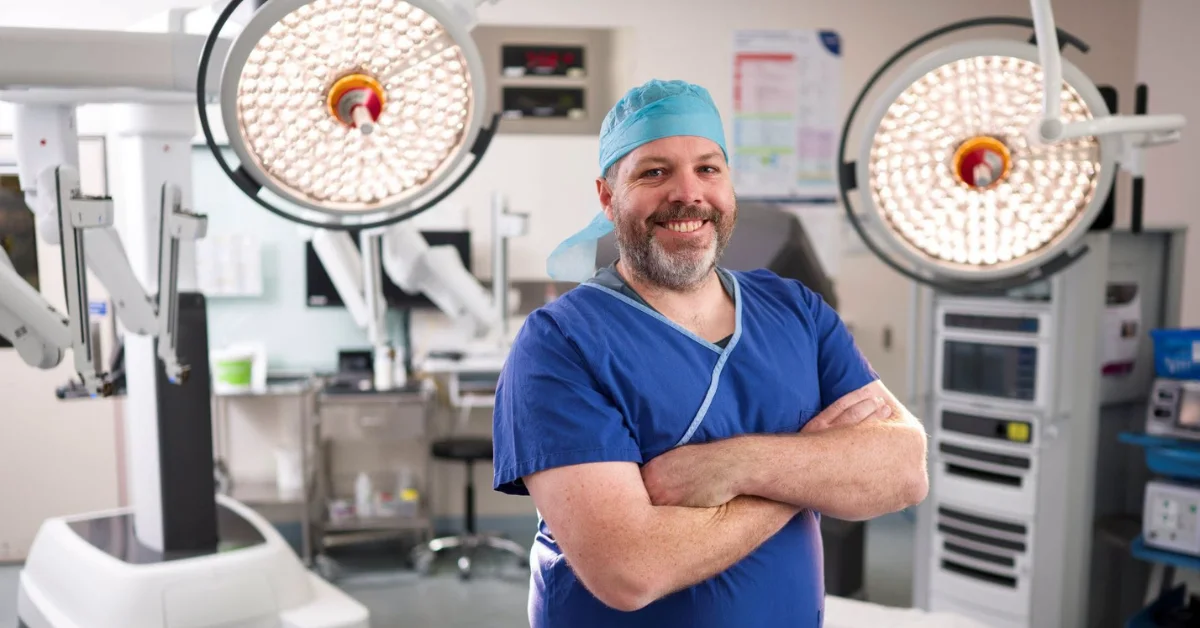
A Brisbane father’s experience with prostate cancer is reinforcing calls from specialists at Mater Private Hospital Springfield for men to be proactive about their health, particularly those with a family history of the disease.
Read: Community Donations Help Bring Cutting-Edge Surgical Technology to Mater Springfield
After receiving normal results from routine blood tests, 58-year-old Terry Brouwers remained concerned when urinary changes persisted. After discussing his ongoing symptoms with his doctor, he underwent an MRI, which revealed an abnormality in his prostate. A subsequent biopsy confirmed early-stage prostate cancer, allowing him to undergo surgery just weeks later.
His experience highlights an important message from clinicians. While the Prostate-Specific Antigen (PSA) blood test remains a valuable screening tool, it does not identify every case of prostate cancer. Doctors say men who continue to experience symptoms or have concerns should return to their GP to discuss further assessment.
Early detection can save lives

Dr Sam Davies, a urologist at Mater Private Hospital Springfield, said prostate cancer remains the most commonly diagnosed cancer among Australian men, with about 29,000 new cases expected each year.

He said about 79 Australian men are diagnosed with the disease every day and around 11 die from it daily. Although prostate cancer is more common in older men, more than 450 Australians under the age of 50 are expected to receive a diagnosis this year.
Dr Davies said earlier diagnosis and improvements in treatment have led to much better outcomes, with around 91 per cent of men now expected to survive at least 10 years after diagnosis.
He encouraged men aged over 50 to speak with their doctor about regular PSA blood tests, which are largely funded through Medicare. For those with a family history of prostate cancer, discussions about screening should begin earlier, between the ages of 40 and 45, as inherited factors account for a significant proportion of prostate cancer risk.
Mr Brouwers had been undergoing regular prostate checks since his late 40s because his grandfather had previously been diagnosed with the disease. Although his PSA test returned within the normal range, persistent changes in his urination prompted him to seek further investigation.



An MRI detected an abnormal area in his prostate and a biopsy later confirmed early-stage cancer. He underwent surgery within weeks of receiving the diagnosis.
Since his treatment, Mr Brouwers has been encouraging other men to speak openly about prostate health and to seek medical advice if something does not feel right. He hopes sharing his experience will help reduce the stigma that can prevent men from discussing prostate cancer or attending routine health checks.
Health experts say prostate cancer often develops without noticeable symptoms in its early stages, making regular screening especially important for those at increased risk. When symptoms do appear, they can include changes in urination, pain in the lower back, pelvis or testicles, or discomfort while urinating. These symptoms may not appear until the disease has progressed.
The issue has also received renewed public attention following British television personality Jeremy Clarkson’s announcement that he had been diagnosed with an aggressive form of prostate cancer.
Read: The Beginnings of Collins Estate, the ‘Most Cheerful’ Address in Annerley
While no screening method can detect every case, doctors say men should pay attention to persistent changes in their health and seek further medical advice if symptoms continue, even when initial test results appear reassuring.
For Queensland families, the message is clear. Knowing your risk, attending regular health checks and having open conversations with your GP could help detect prostate cancer earlier, when treatment is most likely to be successful.
Published 1-July-2026