




Springfield Lakes has become Queensland’s hottest spot for home batteries, with local households installing more new storage than anywhere else in the state in just six months — turning sunny rooftops into round-the-clock power for kitchens, air-cons and school-night routines.
New data released in January 2026 by the Clean Energy Regulator and analysed by the Queensland Conservation Council shows postcode 4300 (Springfield) ranked No.1 in Queensland for home battery installations since July 2025, with 13.4 MWh installed across 520 homes.
Across Queensland, the same analysis found 777 MWh of home battery storage has been installed across more than 32,000 homes in the six months to January, following the rollout of the national Cheaper Home Batteries Program.
For families in fast-growing suburbs like Springfield Lakes, a home battery can mean using more of their own solar power at night — when lights, cooking and cooling are often at their peak. It also helps cut reliance on grid electricity during expensive evening hours.

Queensland Conservation Council campaigner Clare Silcock said the surge shows people are choosing clean tech because it’s a practical way to manage the cost of living — especially in outer suburban and regional communities.
But while home batteries are spreading quickly from house to house, the group says big, grid-scale battery projects in Queensland have not kept pace, and renters are still missing out on the benefits.
Where else are batteries taking off?
Springfield wasn’t the only area charging ahead. The other top postcodes for battery installs since July were:
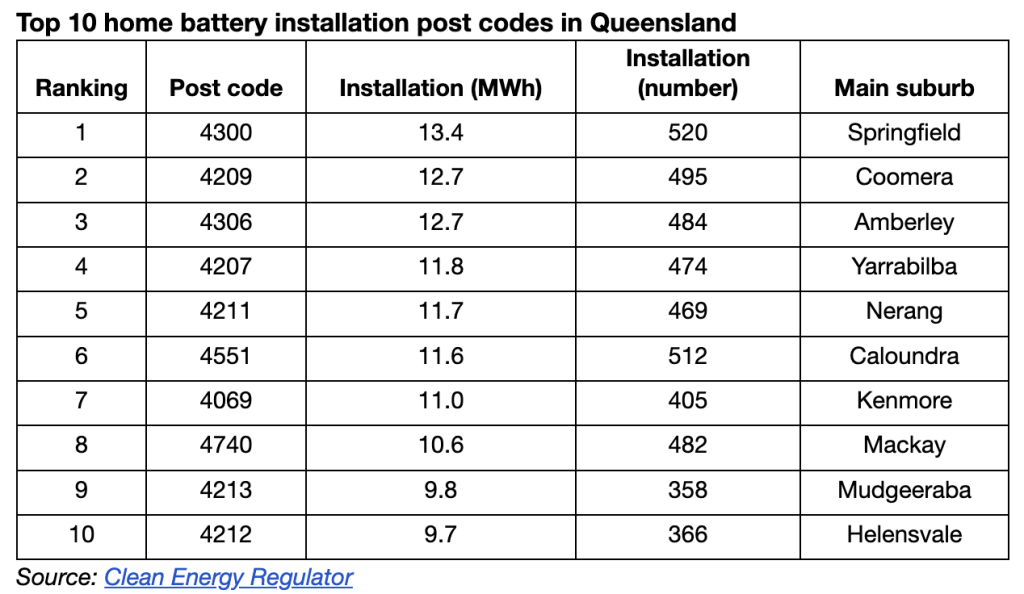
The Clean Energy Regulator notes solar battery postcode data has only been available since 1 July 2025, when batteries became eligible under the Small-scale Renewable Energy Scheme, meaning the state-by-state picture is now coming into sharper focus.



Why the rush now?
The battery boom is being linked to the federal Cheaper Home Batteries Program, designed to make storage more affordable for households already using rooftop solar.
The federal government has also flagged updates to the program from 1 May 2026, subject to regulations being made.
In simple terms: more people are deciding it’s worth storing the solar power they already generate — rather than sending it back to the grid and buying electricity later at higher prices.
What it means for the local community
For many Springfield Lakes households, home batteries aren’t about gadgets or trends — they’re about control.
The benefits are easy to explain around the dinner table:
- More solar used at home after sunset
- Lower power bills over time (depending on usage and tariffs)
- Less pressure on the local grid during peak times
- A step toward a suburb that can better handle hotter summers and growing energy demand
With Springfield Lakes continuing to grow, the jump in battery installs also shows how quickly a community can shift when the numbers stack up — especially when families are already used to rooftop solar.
The bigger question: who gets left behind?
Energy groups say the next challenge is making sure renters and social housing residents can share in the savings, not just owner-occupiers.
Queensland Conservation Council argues that programs for renters remain small compared with the pace of battery installs happening in private homes, and is calling for more support so the energy transition feels fair across all neighbourhoods.
Published 15-Jan-2026